
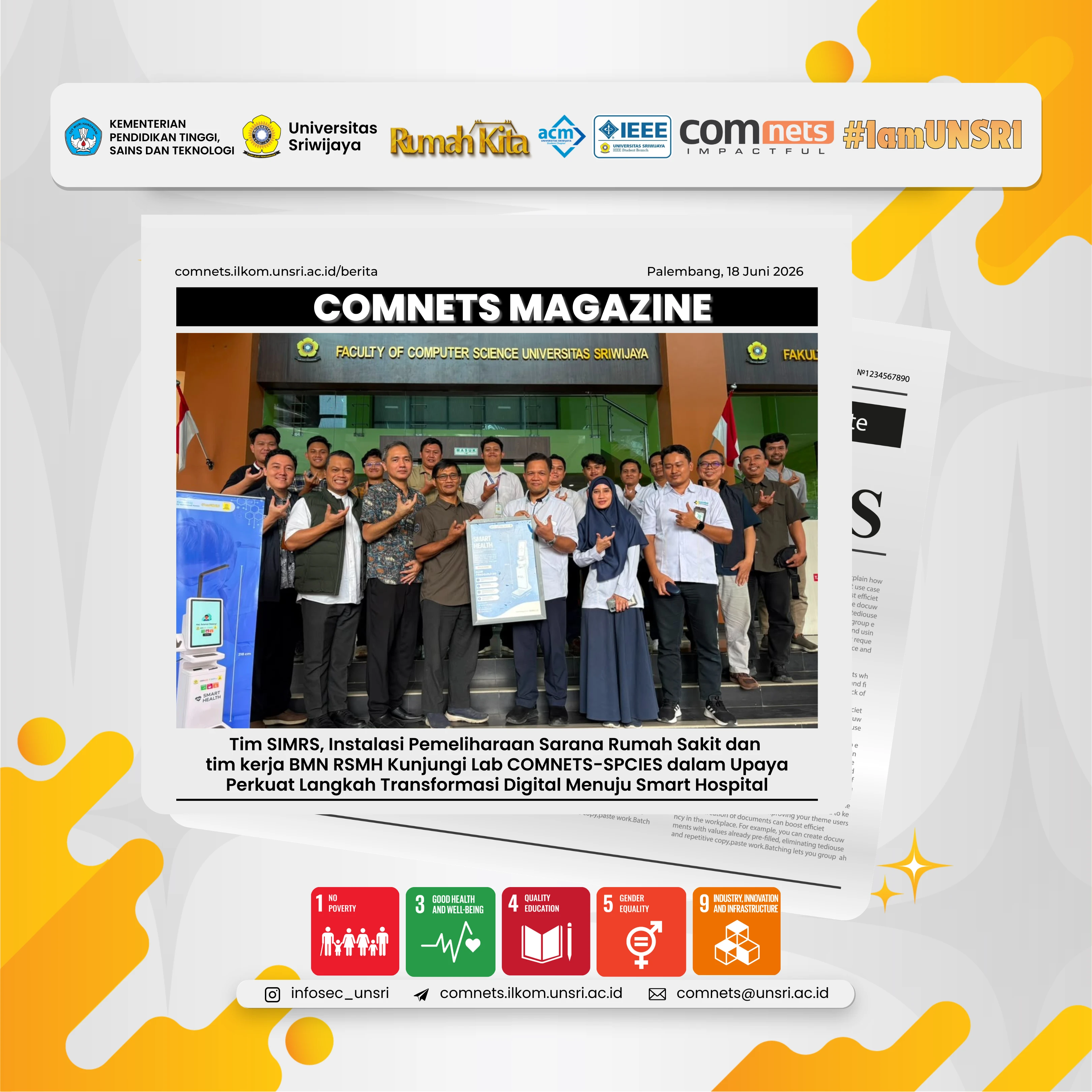
The Dr. Mohammad Hoesin General Hospital (RSUP) in Palembang continues its digital transformation efforts toward the “Smart Hospital” concept. As part of developing this transformation roadmap, the RSMH team conducted a working visit to the COMNETS-SPCIES Laboratory at the Faculty of Computer Science, Sriwijaya University, to explore various technological innovations that could potentially be applied in the hospital environment, particularly in hospital management and services.
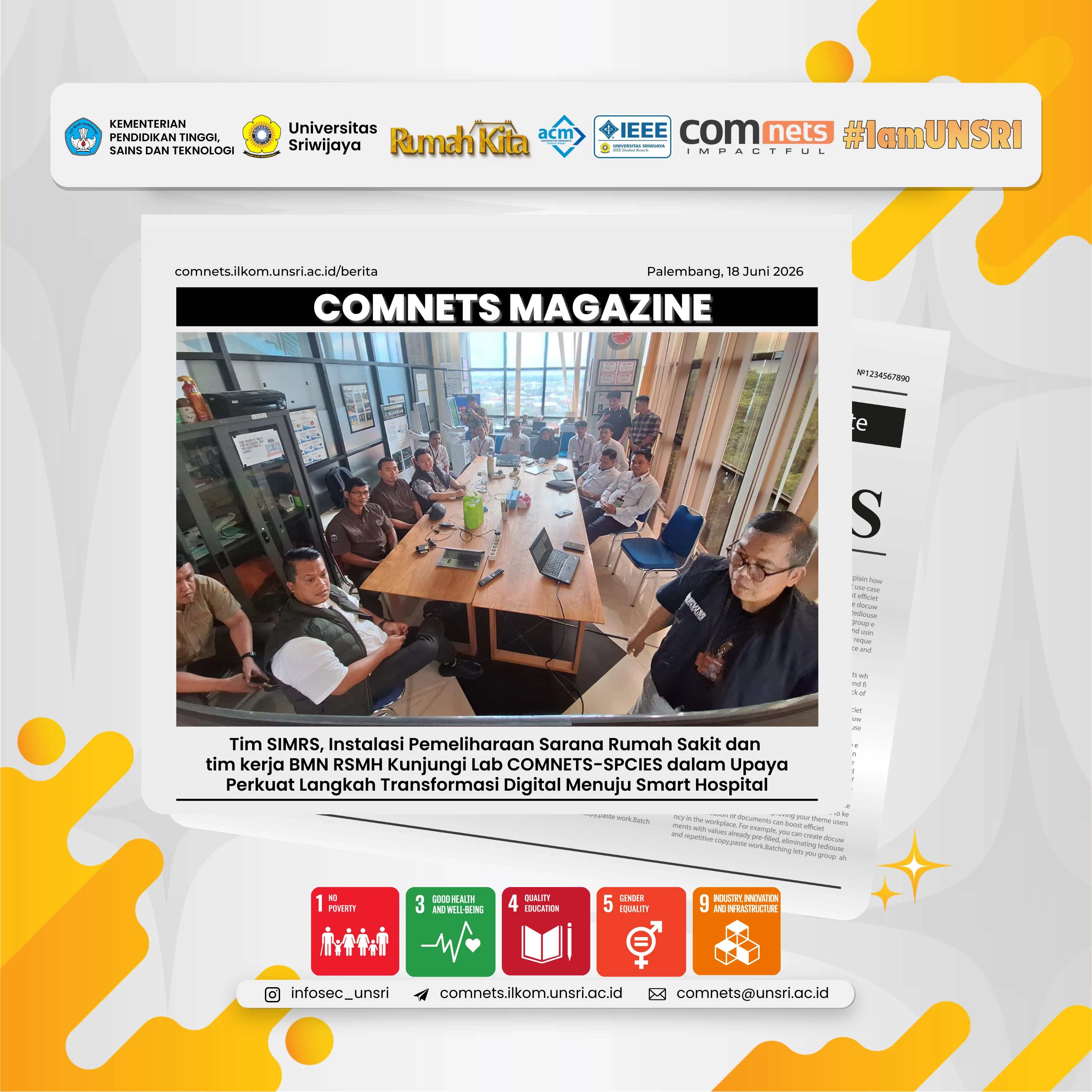
The team was led by Prof. Ir. Deris Stiawan, Ph.D. (Deputy Director of the UNSRI Alumni Office and Doctoral Instructor at the Faculty of Computer Science), accompanied by the Head of the Computer Systems Department, Dr. Sutarno; the Department Secretary, Dr. Huda Ubaya; and the Head of the Informatics Department, Dr. Hadi Purnawan Satria, M.Sc. He explained that the development of health technology today focuses not only on the digitization of administrative processes but also on the integration of medical devices, service automation, and the use of AI to support more effective and efficient hospital operations. Ultimately, this supports management decision-making.
Meanwhile, representatives from RSMH stated that this visit is a crucial part of the process to identify and evaluate technologies that can be implemented in RSMH’s transformation program toward becoming a Smart Hospital. Collaboration with universities and research centers is considered a strategic step toward delivering innovations that align with the future needs of healthcare services.
Through this visit, both institutions also opened opportunities for further collaboration in the fields of research, health technology development, and the implementation of digital solutions that can support improvements in the quality of healthcare services in South Sumatra.
The event, which took place at the research laboratory, was attended by members of the management team, including Okom Rindi Astowo, Ners, M.Kes—Head of the SIMRS Installation. Agung Chandra Kharisma, S.Kom—Acting Program Manager of the SIMRS Department; Ulul Azmi, A.Md—SIMRS Department Staff; and Dewa Sheva Dzaky, S.Kom—SIMRS Department Staff. Also present were the Head of the Hospital Facilities Maintenance Unit (IPSRS), Muhamad Fahrudin Yusuf, S.Tr.T, and Jepri Winaldi, AMTE—Acting Head of Medical Equipment Maintenance at the RSMH IPSRS. Also present were Ayuningtyas Siti Rahma Kunto, SE—Manager of the Accounting and State-Owned Assets (BMN) Task Force—and Muhammad Aqsha, A.Md.M—Staff Member of the Accounting and BMN Task Force.
During the event, the COMNETS-SPCIES team presented several research findings and technological developments relevant to the needs of modern, digitally-based hospitals. One innovation that drew particular attention was an intelligent navigation system for medication-delivery robots powered by artificial intelligence (AI). This technology is designed to enable the robot to move autonomously within a hospital environment by utilizing sensors, room mapping, and AI algorithms to determine safe and efficient routes. Through this system, the robot can assist in the distribution of medications from the pharmacy to patient care rooms, thereby reducing the workload on healthcare staff while improving hospital operational efficiency. Additionally, the use of robots is also considered capable of minimizing the risk of distribution errors and supporting faster service delivery to patients. The strengths of this robot, named MEDRO (Medicine Delivery Robotics), as explained by its team leader Dr. Ahmad Zarkasi, are based on three main pillars: (1) Obstacle Detection, (2) Intelligent Navigation, and (3) Hydraulic System.
In addition to the demonstration of the medication delivery robot, the COMNETS-SPCIES team also presented a concept for interconnecting Intensive Care Unit (ICU) equipment with the Hospital Management Information System (HMIS), presented by Team Leaders Dr. Kemahyanto Exsaudi and Rahmat Fadli Isnanto, M.Sc. They explained how this solution enables various medical devices in the ICU, such as patient monitors, ventilators, and other vital sign monitoring devices, to connect directly to the hospital information system. With this integration, patient data can be automatically transmitted and recorded in the HIMS in real time. The implementation of this system is expected to improve the accuracy of medical data, accelerate clinical decision-making processes, and support the development of data-driven healthcare.
Meanwhile, representatives from RSMH stated that this visit is a crucial part of the process to identify and evaluate technologies that can be implemented in RSMH’s transformation program toward becoming a Smart Hospital. Collaboration with universities and research centers is considered a strategic step toward delivering innovations that align with the future needs of healthcare services.
Through this visit, both institutions also opened opportunities for further collaboration in the fields of research, healthcare technology development, and the implementation of digital solutions that can support improvements in the quality of healthcare services in South Sumatra. The transformation toward a Smart Hospital is one of RSMH’s strategic priorities in addressing the challenges of modern healthcare. By leveraging technologies such as AI, robotics, the Internet of Things (IoT), and information system integration, RSMH aims to deliver services that are faster, more accurate, safer, and patient-centered.
At the end of the meeting, several follow-up actions were outlined, such as (1) a ceremonial event to hand over SMART HEALTH equipment to RSMH, which will be incorporated into an RSMH seminar, and (2) FASILKOM being given the opportunity to become the Smart Digital R&D Center of Excellence (CoE).