
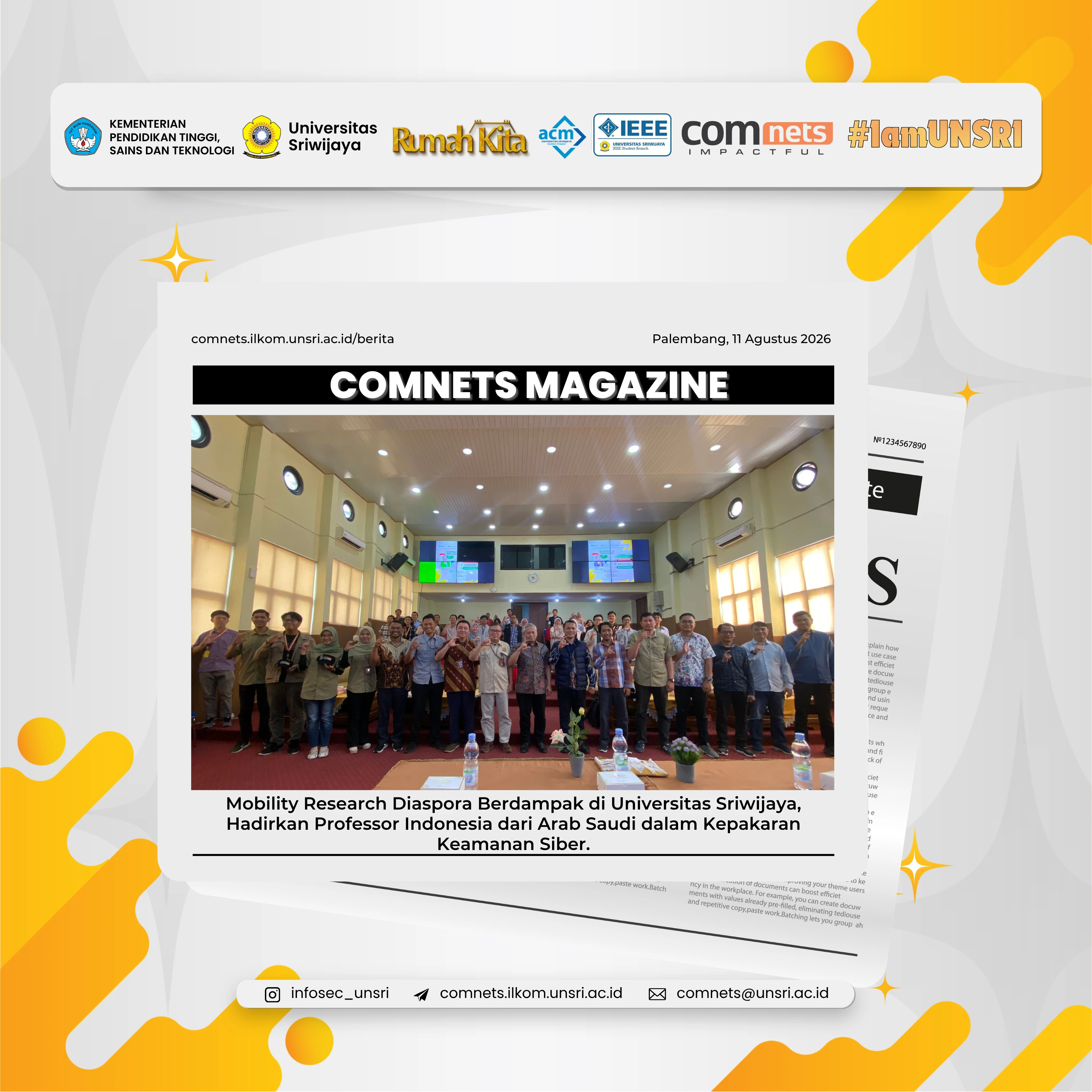
Palembang, August 11, 2026 — The COMNETS Research Group at the Faculty of Computer Science, Sriwijaya University (FASILKOM UNSRI), organized a Mobility Research event for the diaspora as part of efforts to strengthen research networks, knowledge transfer, and international collaboration in the field of computer science, particularly computer networks and cybersecurity. The event was attended by dozens of participants from various levels, ranging from undergraduate students and alumni to doctoral students at Sriwijaya University.
This event was made possible through a grant from the Directorate of Research and Development Talent Development, Directorate General of Research and Development, Ministry of Higher Education, Science, and Technology. The program featured Prof. Dr. Rahmat Budiarto, an Indonesian scholar who has served as a full professor at Al Baha University in Saudi Arabia since 2014. Prof. Rahmat’s expertise aligns with the research focus of the COMNETS Research Group, particularly in computer networks and cybersecurity. His international contributions have been marked by numerous publications in world-renowned journals, awards, and involvement in various grants and research projects abroad.
Prof. Rahmat’s visit to Sriwijaya University serves as a strategic opportunity to bring together the expertise of Indonesian academics working abroad with the UNSRI academic community. In addition to providing insights into the latest developments in science and technology, this event is also aimed at opening opportunities for international research collaboration and strengthening the capabilities of young researchers.
The event was officially opened by a representative from the Alumni Subdirectorate of Sriwijaya University, Prof. Deris Stiawan, Ph.D. In his remarks, he addressed strategic issues regarding “Jobs and the Future of Work,” particularly concerning changes in the needs, characteristics, and paradigms of the workforce amid the development of digital technology and artificial intelligence (AI). Rapid technological change has impacted various sectors of the workforce. Layoffs in a number of industries—particularly in technology companies—as well as shifts in work patterns and job types represent challenges that college graduates must understand. Therefore, universities are not only required to produce graduates with academic competencies but also to equip them with the ability to adapt, engage in lifelong learning, think critically, and understand technological developments.
This perspective is becoming increasingly relevant for students and alumni as the world of work is currently undergoing rapid transformation. The competencies required are no longer limited to specific technical skills but also include the ability to collaborate, innovate, solve problems, and adapt to new technologies. Furthermore, technology is no longer merely a tool to aid work. Technology is beginning to play a decisive role in determining which jobs are created, which jobs are transformed, which jobs disappear, and which skills become highly valued.
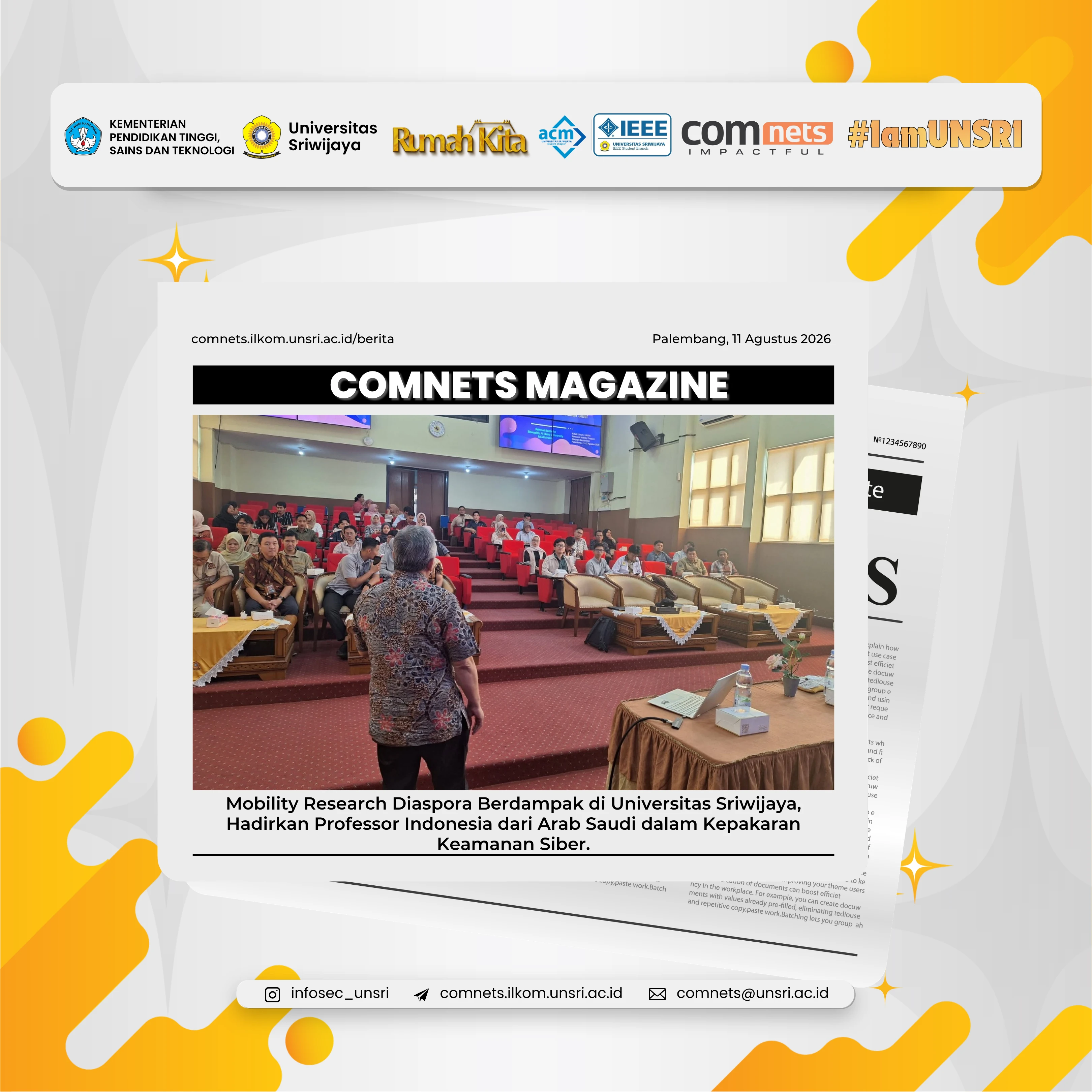
The next session was led by Prof. Dr. Rahmat Budiarto, who presented the latest developments and research directions in the field of computer science, with an emphasis on computer networks and cybersecurity. In his presentation, Prof. Rahmat explained the various challenges arising from the development of Artificial Intelligence, the transformation of computer networks, and the increasing complexity of cybersecurity threats. On one hand, advancements in AI offer significant opportunities to enhance the capabilities of computing systems and networks; on the other hand, they also present new challenges in maintaining the security and reliability of digital systems.
Various potential research topics were also introduced to the participants, including advancements in networking technology, cybersecurity, and research opportunities relevant to industry needs and global technological developments. In addition to discussing academic developments, Prof. Rahmat also shared his experiences regarding a number of research projects and international collaborations he has undertaken during his time abroad. These experiences provided participants with insight into how research in computer science is developed, collaborated on, and directed to make a contribution at the international level.
The participants’ enthusiasm was evident during the discussion session. Several students asked questions about research opportunities, advancements in AI technology, cybersecurity, and how students can prepare themselves for careers and continue their research on a global scale.
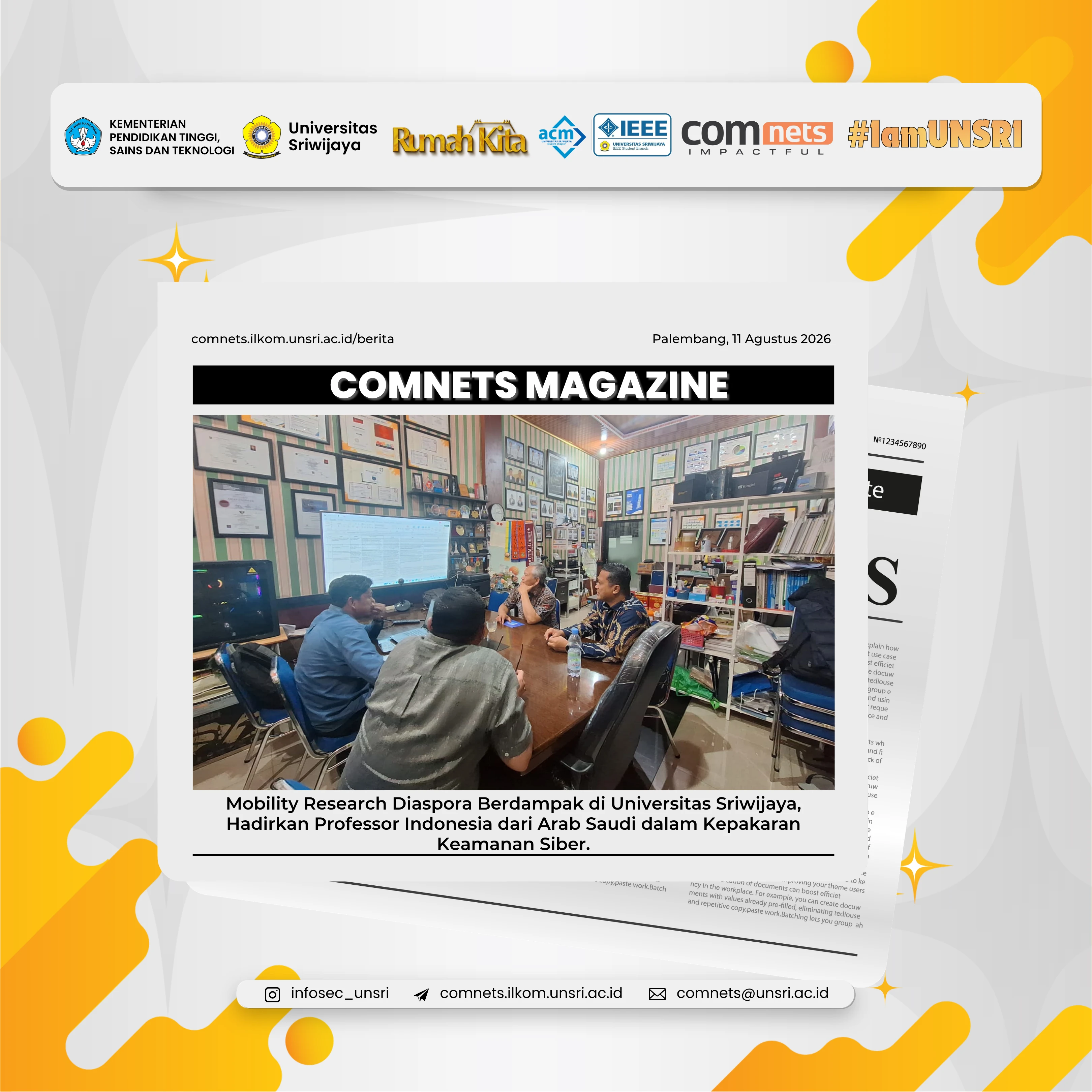
The event then continued with a discussion session and progress reports from doctoral students currently conducting research in the field of cybersecurity, specifically on the Industrial Internet of Things (IIoT). During this session, the students presented the progress of their research, which is currently in the literature review phase. The discussion with Prof. Rahmat was aimed at strengthening research mapping, identifying research gaps, and exploring opportunities to develop research topics to ensure a stronger scientific contribution.
The interaction between diaspora professors and doctoral students was a key component of this Mobility Research program. The exchange of experiences and perspectives is expected to help students gain direct input from academics with international research experience.
The Mobility Research Program for the Diaspora at Sriwijaya University demonstrates that the Indonesian diaspora active at various universities around the world has great potential to serve as a bridge for international academic and research collaboration. For Sriwijaya University, the visit by Prof. Dr. Rahmat Budiarto is not only an opportunity to gain insights into global developments in computer science but also a platform to build research networks and open up broader opportunities for collaboration.
Through activities like this, COMNETS FASILKOM UNSRI encourages the relationship between domestic academics and the Indonesian diaspora abroad to go beyond mere knowledge-sharing and evolve into research collaboration, scientific publications, talent development, and sustainable international academic networks.
Amid the accelerating pace of digital transformation and advancements in AI, strengthening human resources and global research networks has become increasingly important. The presence of the Indonesian diaspora, with their international academic and research experience, is expected to have a tangible impact on the development of the research and innovation ecosystem at Sriwijaya University.