
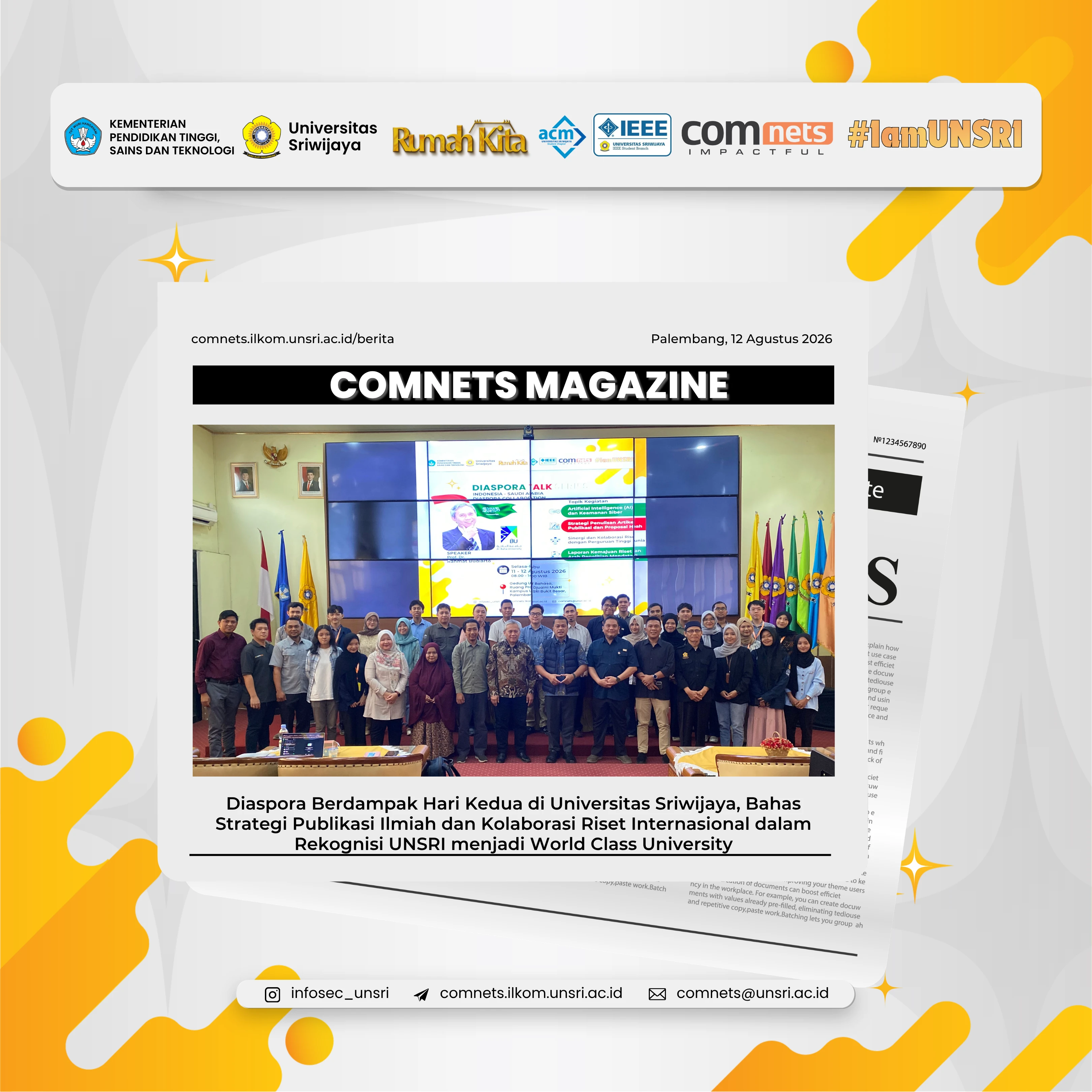
Palembang, August 12, 2026 — The “Diaspora Berdampak” event series at Sriwijaya University (UNSRI) entered its second day with a presentation by Prof. Dr. Rahmat Budiarto, a full professor at Al Baha University in Saudi Arabia, who has been serving at that university since 2014.
This event is part of the Research Mobility for the Diaspora program, funded by a grant from the Directorate of Research and Development Talent Development, Directorate General of Research and Development, Ministry of Higher Education, Science, and Technology. This program was initiated to strengthen knowledge exchange, talent development, as well as research networking and collaboration between academics in Indonesia and the Indonesian diaspora working at universities abroad.
Prof. Rahmat Budiarto’s expertise aligns with the research focus of the COMNETS Research Group at the Faculty of Computer Science, University of Sriwijaya, particularly in the fields of computer networks and cybersecurity. His international academic achievements are supported by numerous reputable scientific publications, awards, and experience in various international research grants and projects.
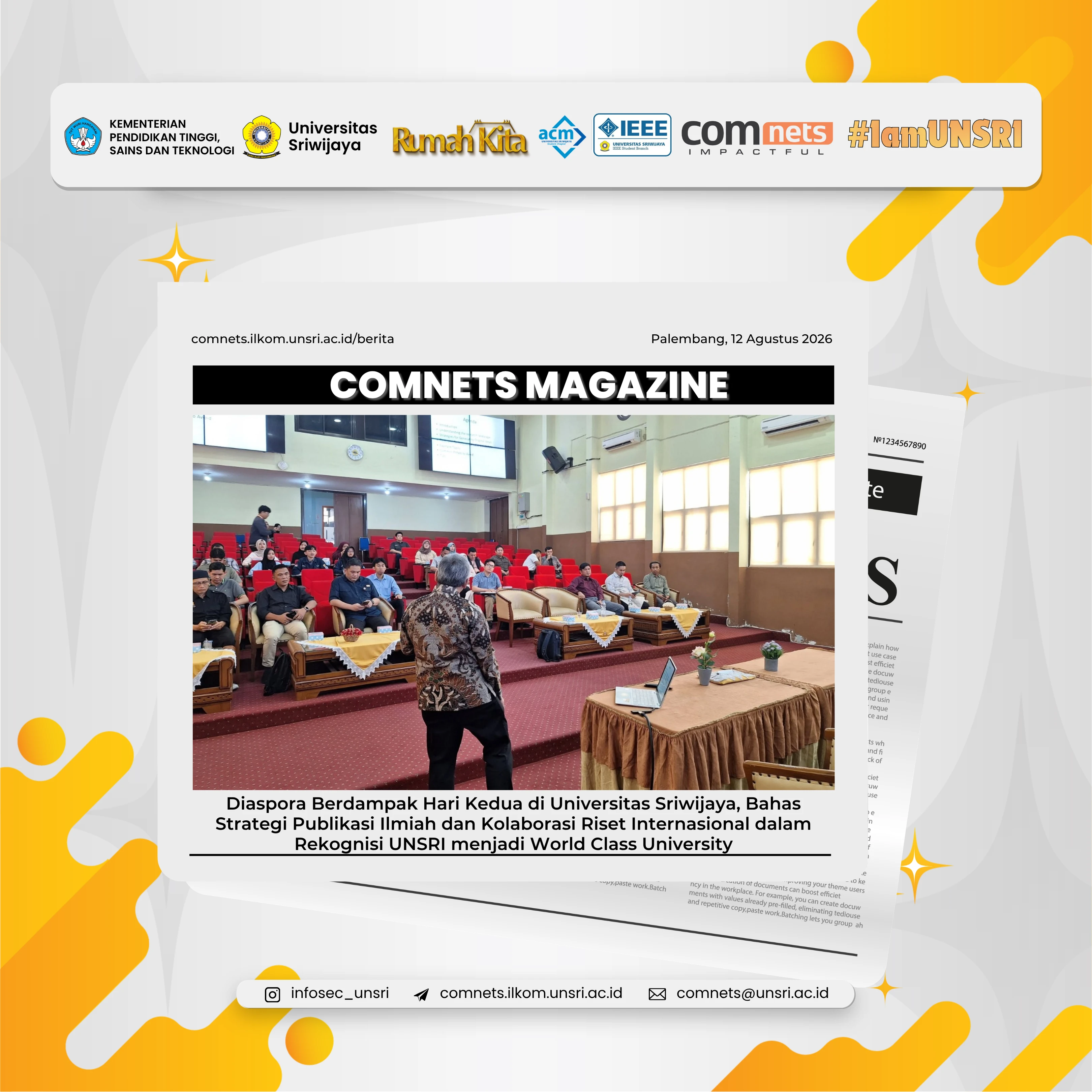
Continuing the series of activities from the first day, the second day’s session focused on strengthening the capabilities of researchers and students to produce high-quality scientific publications with a good chance of being accepted in reputable journals.
During the session, Prof. Rahmat specifically discussed strategies for writing scientific articles, ranging from the initial stages of manuscript preparation to strategies for navigating the publication process in international journals. Participants gained an understanding of the key stages in producing a scientific manuscript, including how to determine the research focus, build a scientific argument, structure the article, present research results systematically, and ensure that the research’s contributions are clearly understood by readers and reviewers.
Prof. Rahmat also emphasized various “dos and don’ts” in scientific writing. Aspects that may seem simple in the writing process but can determine a manuscript’s quality were discussed in greater depth based on his experience with international publications and research. Beyond focusing on the technical aspects of writing, participants were also guided to understand how to view a research study from the perspective of editors and reviewers. Key strategies covered in this session included selecting journals appropriate for their research field, aligning the manuscript with the journal’s scope, highlighting the novelty of the work, and avoiding common mistakes that could lead to manuscript rejection.
This discussion provided a practical perspective for UNSRI students, alumni, and researchers to improve the quality of their publications and foster a research culture more aligned with international academic standards. The “Impactful Diaspora” program is a concrete step toward leveraging the experience and networks of the Indonesian diaspora as a strength to bolster research talent, enhance academic competitiveness, and bring the research outcomes of Sriwijaya University into international research networks.
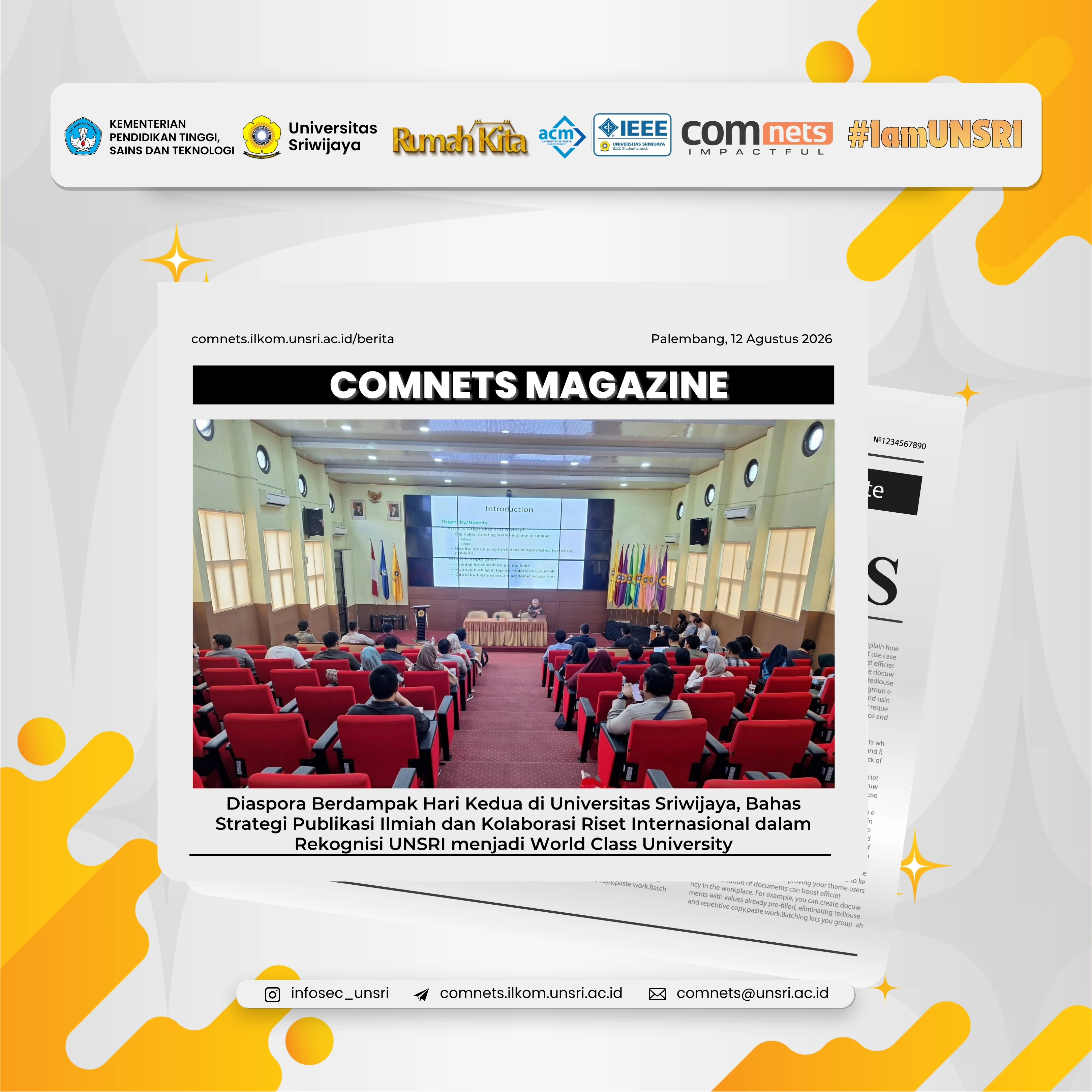
The next session addressed an equally strategic theme: opportunities and synergies for research collaboration between researchers and alumni of Sriwijaya University and academic partners abroad, particularly in Saudi Arabia. Prof. Rahmat outlined various opportunities that can be developed through international academic and research networks. His experience working at Al Baha University served as a gateway to introducing potential collaborations that UNSRI researchers and alumni could pursue.
In his presentation, Prof. Rahmat highlighted the evolving research agenda in Saudi Arabia, which is increasingly focused on sustainability and the Sustainable Development Goals (SDGs). This situation opens opportunities for researchers from various disciplines to build collaborations that not only result in scientific publications but also contribute to solving real-world problems and promoting sustainable development. A number of strategies to support collaboration were also discussed in greater detail, ranging from how to build networks with international researchers, identify research themes of mutual interest, develop collaborative proposals, to advancing research with the potential to secure international funding.
The activities on the second day of “Diaspora Berdampak” demonstrated that the presence of the Indonesian diaspora at foreign universities can play a strategic role in strengthening the connectivity between Indonesia’s research ecosystem and the global academic community.
For the UNSRI academic community, Prof. Rahmat’s experience provides access to perspectives, experiences, and research networks that are thriving within the international academic environment. This knowledge transfer is expected to drive improvements in the quality of publications while opening up more opportunities for cross-border research collaboration.
Through this initiative, COMNETS FASILKOM UNSRI continues to promote capacity building among researchers and students so they can produce research with global relevance. It is hoped that collaboration with the diaspora will not stop at knowledge-sharing activities but will evolve into joint publications, collaborative research, academic exchanges, and sustainable international cooperation.