
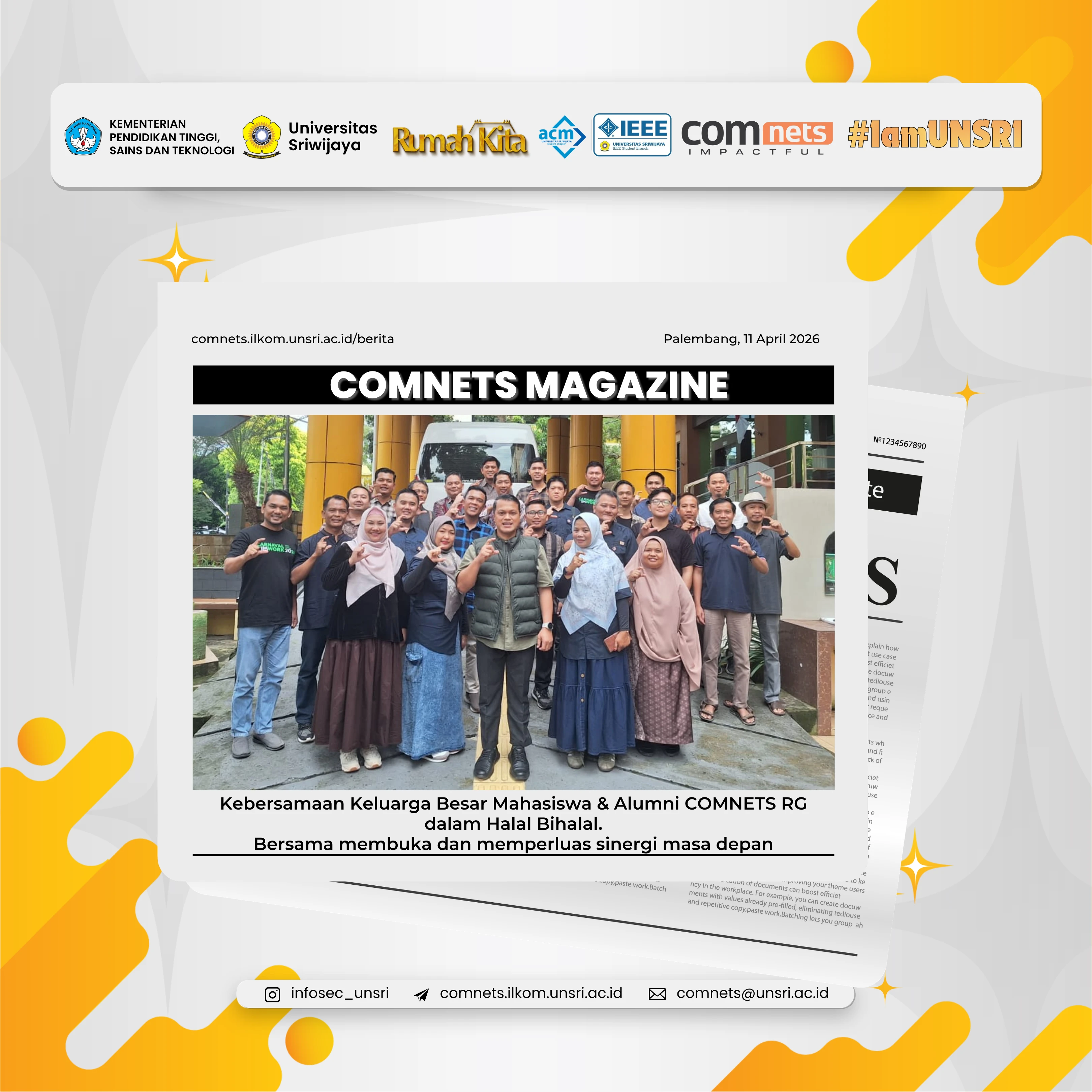
Amid rapid technological advancements, the need for synergy between the academic world, the industrial sector, and the government is becoming increasingly urgent, particularly in the application of artificial intelligence. The gap between theories developed in academic settings and real-world practices presents a tangible challenge that must be bridged immediately. In response to this, regular meetings between current students and doctoral alumni in the Computer Science concentration of the Faculty of Engineering at Sriwijaya University (UNSRI) are held routinely to strengthen ties. To that end, the Head of the Alumni Sub-Directorate of the Directorate of Cooperation, Internationalization, and Alumni (DKIA) at UNSRI attended the event with the aim of strengthening, expanding, and opening up future synergies. Doctoral alumni from universities were present, as were representatives from industry, such as PT. PUSRI, PT. Semen Baturaja, PT. PLN, the Provincial Government, and hospitals.
Academics are recognized for their strengths in research, methodology, and in-depth conceptual development, while industry and government face concrete challenges requiring swift, precise, and practical solutions. Without close collaboration, the immense potential of artificial intelligence risks being underutilized or even applied without a solid foundation. Through targeted synergy, AI-based innovations can be developed to better align with society’s real-world needs. The academic world can serve as a hub for technological and ethical development, while industry and government act as implementation platforms ensuring these solutions have direct and sustainable impacts. This gathering was dominated by doctoral students and alumni specializing in Edge Computing, Information Security, and Web 3.0 for Smart Industries and Cyber-Physical Systems under the COMNETS Research Group (Computer Networks, Enterprise & Information Security) at the Faculty of Computer Science, UNSRI.
“Discover, Connect & Collaborate” was the slogan echoed in the spirit of mutual connection for shared progress in the future. The warm gathering between alumni and students was filled with a sense of camaraderie, creating a close-knit atmosphere rich in meaning. This event served as a cross-class gathering, where the alumni’s experiences blended with the fresh energy and ideas of the graduating students—particularly regarding strategies for navigating the final semester and securing publications in reputable journals as graduation requirements. In this warm atmosphere, alumni colleagues shared stories, inspiration, and perspectives on developments in the professional and academic worlds. Discussions included Smart Industry within CPS and Smart Contracts, as well as current issues regarding the “AI war” and the emergence of Quantum Computing, which is set to transform the direction and speed of computing. Discussions on Machine Learning (ML) and Deep Learning (DL) were also covered, particularly by colleagues from the government sector currently undergoing transformation. Prof. Deris Stiawan, Head of the Alumni Sub-Directorate, expressed great pride in these alumni and noted that the sense of camaraderie was deeply felt through the interactions, which not only strengthened emotional bonds but also opened up broader opportunities for future collaboration.
This momentum was utilized to build a strong network, broaden perspectives, and explore potential synergies between alumni and students. With a spirit of mutual support, this gathering is hoped to serve as the first step in creating sustainable collaborations capable of making tangible contributions to shared progress, as also explained by one of the leaders at DKIA. The sense of togetherness that has been built serves as proof that the relationship between alumni and students is not severed by time, but continues to grow as a collective strength in facing challenges and seizing opportunities in the future. During the alumni gathering, a collaboration was also established with an Information Technology consultant in South Sumatra to facilitate internships for graduating students and the recruitment of alumni according to the specifications of an Internet Service Provider to become employees there.
Furthermore, this collaboration is crucial for formulating policies that are adaptive to technological advancements. The involvement of academics in the decision-making process will strengthen scientific and ethical aspects, while input from industry ensures policies remain realistic and aligned with market dynamics. In conclusion, by building solid partnerships, artificial intelligence becomes not only a symbol of technological progress but also a strategic tool for addressing various challenges in the public sector and industry. This synergy is expected to create an inclusive, competitive, and future-oriented innovation ecosystem.