
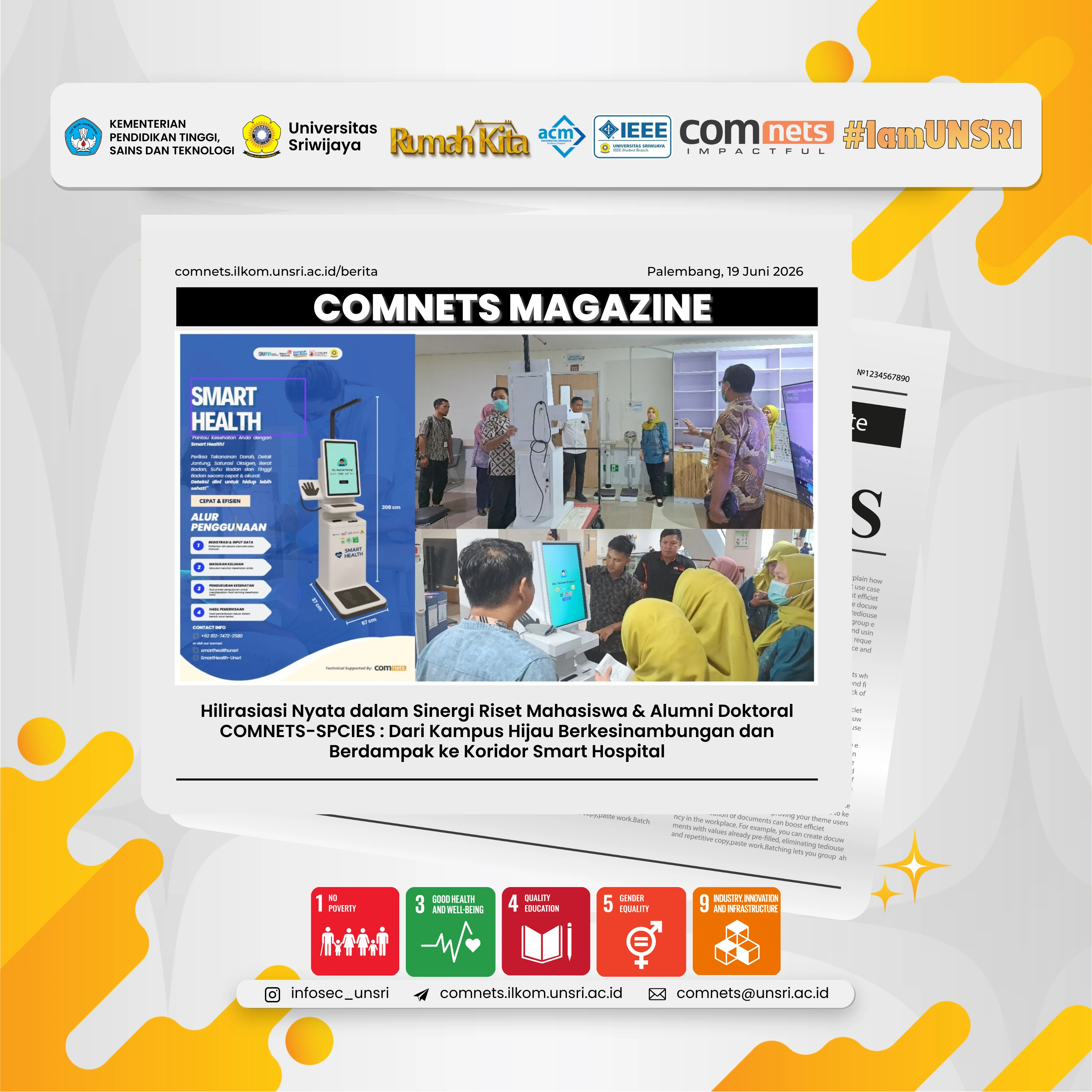
The atmosphere in the corridors of the Executive Wing at Dr. Mohammad Hoesin Central General Hospital (RSMH) in Palembang today marked a new milestone in the history of medical digitization in South Sumatra. A cutting-edge healthcare innovation—Smart Health—the result of two years of in-depth research by faculty members from the Faculty of Computer Science, Computer Systems students, and doctoral alumni at Sriwijaya University (UNSRI), was officially tested and installed directly in the Executive Wing. This crucial
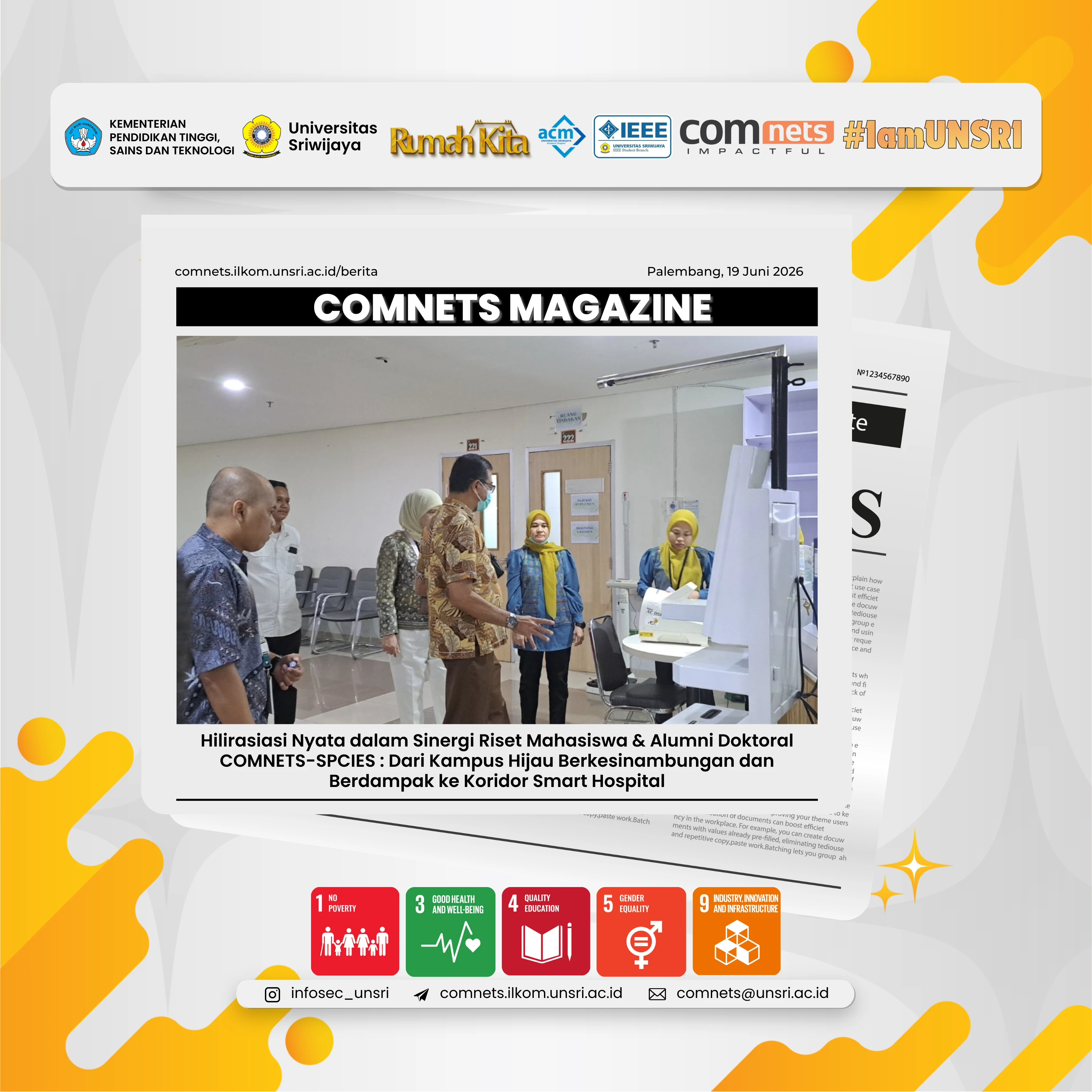
milestone was witnessed and tested firsthand by the Director of Operational Services (DirLO) at RSMH, Dr. Rahmadian, MKM. He tested the reliability of the smart device while ensuring that all recorded medical data was directly connected to the Hospital Management Information System (SIMRS) using the Single Sign-On (SSO) method. The collaboration between DIRLO and the UNSRI Faculty of Computer Science has been ongoing for the past two years as part of the IMWORK–COMNETS initiative, in partnership with industry and government entities in South Sumatra.
This Smart Health device, developed by UNSRI researchers, is more than just an ordinary monitoring device. Leveraging artificial intelligence (AI) and IoT, this device can measure six essential health parameters simultaneously in real-time: oxygen saturation, heart rate, blood pressure, body temperature, height, and weight. All this sensor data is processed by AI algorithms to provide an instant and accurate clinical overview of a patient’s initial condition as soon as they enter the Executive Building for the next stage of care, as explained to hospital staff.
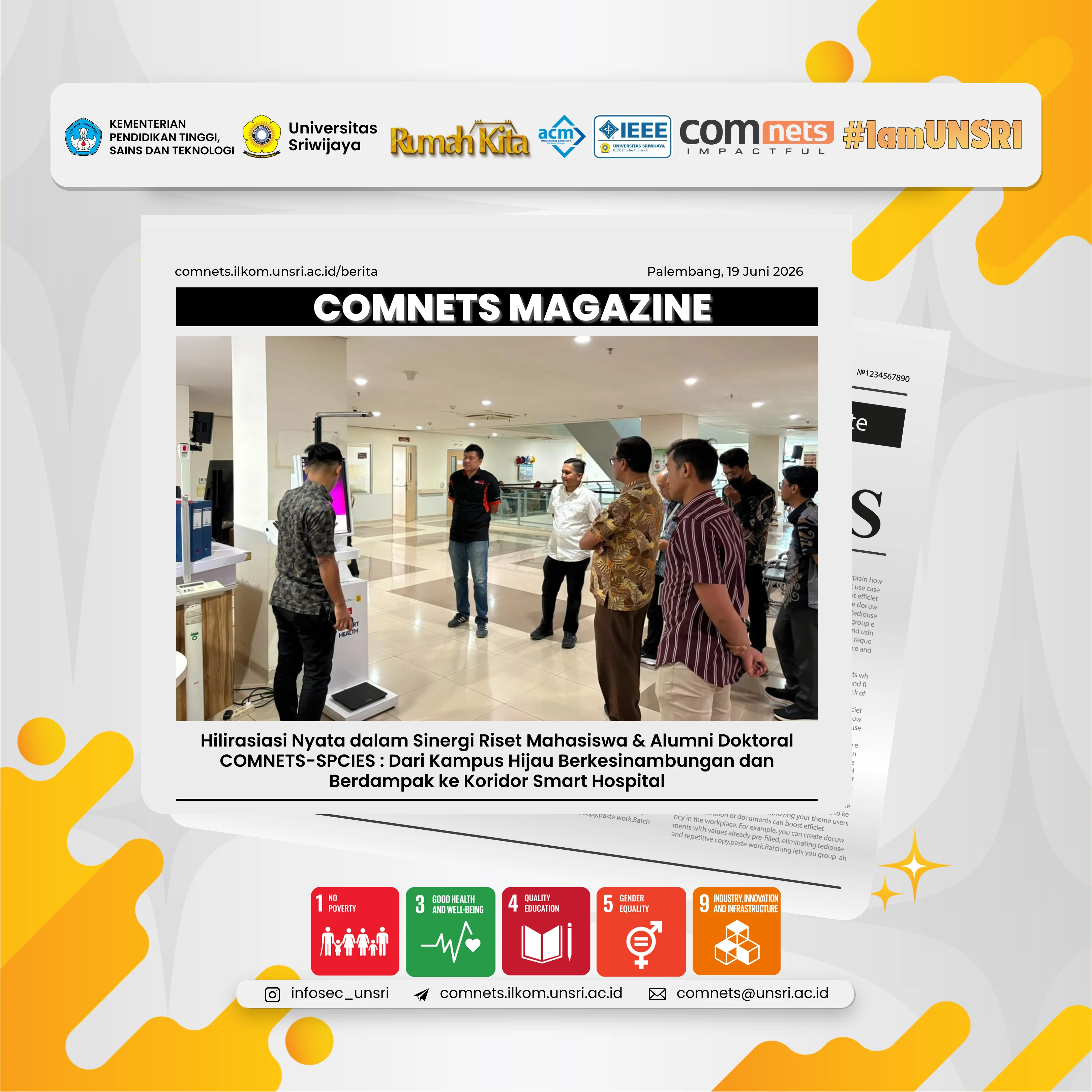
One of the most crucial aspects of today’s demonstration was data interoperability. During the DirLO trial, data from all six health parameters was immediately transmitted to the RSMH SIMRS platform via SSO. Thanks to this interconnection, doctors and nurses no longer need to manually enter patient data from paper forms into computers. Adi Hermansyah, a doctoral student and member of the Smart Health Leader team, added that with this feature: (1) Guaranteed Security: Centralized and encrypted data access; (2) Zero Human Error: Eliminates the risk of mistyping blood pressure or oxygen saturation readings; and (3) Faster Service: As soon as a patient is examined by the Smart Health device, doctors in the consultation room can view the results on their monitors immediately.
The day before, Prof. Ir. Deris Stiawan, Deputy Director of Alumni Affairs, The PhD, who also served as a liaison for this event, stated that the SIMRS team, the Hospital Facilities Maintenance Department, and the RSMH BMN working group had visited the COMNETS-SPCIES Lab to collaborate and strengthen the Digital Transformation efforts there. During the visit, the COMNETS-SPCIES team presented several research findings and technological developments relevant to the needs of modern, digitally-based hospitals. One innovation that drew particular attention was an intelligent navigation system for medication-delivery robots powered by Artificial Intelligence (AI) and the interconnection of Intensive Care Unit (ICU) equipment—such as patient monitors, ventilators, and other vital sign monitoring devices—with the Hospital Management Information System (HMIS). Also present at the Faculty of Computer Science were Dr. Sutarno, Head of the Department of Computer Systems; Dr. Hadi Purnawan Satria, Head of the Department of Informatics; Huda Ubaya, Department Secretary; and several other faculty members who accompanied the delegation from RSMH.
During the event, the COMNETS-SPCIES team presented a number of research findings and technological developments relevant to the needs of modern, digitally-based hospitals. One innovation that drew particular attention was an intelligent navigation system for medication-delivery robots powered by artificial intelligence (AI). This technology is designed to enable the robot to move autonomously within a hospital environment by utilizing sensors, room mapping, and AI algorithms to determine safe and efficient routes. Through this system, the robot can assist in the distribution of medications from the pharmacy to patient care rooms, thereby reducing the workload on healthcare staff while improving the hospital’s operational efficiency. Additionally, the use of robots is expected to minimize the risk of distribution errors and support faster service delivery to patients. The strengths of this robot, named MEDRO (Medicine Delivery Robotics), as explained by its team leader Dr. Ahmad Zarkasi, rest on three main pillars: (1) Obstacle Detection, (2) Intelligent Navigation, and (3) Hydraulic System.
In addition to the demonstration of the medication delivery robot, the COMNETS-SPCIES team also presented a concept for interconnecting Intensive Care Unit (ICU) equipment with the Hospital Management Information System (HMIS), presented by Team Leaders Dr. Kemahyanto Exsaudi and Rahmat Fadli Isnanto, M.Sc. They explained how this solution enables various medical devices in the ICU, such as patient monitors, ventilators, and other vital sign monitoring devices, to connect directly to the hospital information system. With this integration, patient data can be automatically transmitted and recorded in the HIMS in real time. This topic was of particular interest, especially regarding the Mindray BeneView device, as it allows the clinical data it generates to be automatically transmitted to the hospital information system, eliminating the need for manual recording by healthcare staff.
The initial development phase involved identifying and mapping the communication interfaces on the patient monitors. This process aimed to understand the data exchange mechanisms used by the medical devices, including communication port configurations, data formats, and available network protocols. After the identification process was completed, the team implemented a UDP Listener to capture data transmitted in real-time by the patient monitors. Through this mechanism, various patient vital signs—such as heart rate, oxygen saturation (SpO2), blood pressure, respiratory rate, and other clinical indicators—can be directly received by the developed data acquisition system. To bridge the need for integration with modern web-based applications and the SIMRS, the COMNETS-SPCIES team subsequently developed a mechanism to convert HL7 data into JSON format. This approach allows clinical data from patient monitors to be transformed into a lightweight, flexible format that can be easily integrated via an Application Programming Interface (API) into the SIMRS.
It was also explained that this collaboration involves three key elements at UNSRI: (1) Doctoral Alumni: Serving as system architects and conceptual designers by ensuring that the developed technology meets strict standards. (2) Faculty Advisors: They serve as the driving force behind research and development (R&D) while bridging regulatory gaps between the academic world—particularly the Support Lab—and the real-world needs of the hospital. And (3) Students: They are the creators behind the scenes who assemble the hardware and program the software.
The presence of this device represents a tangible application of research results, underscoring RSMH’s serious commitment to adopting local technology. This collaboration between UNSRI and RSMH proves that “Wong Kito” is capable of leading the advancement of smart hospitals in South Sumatra.