
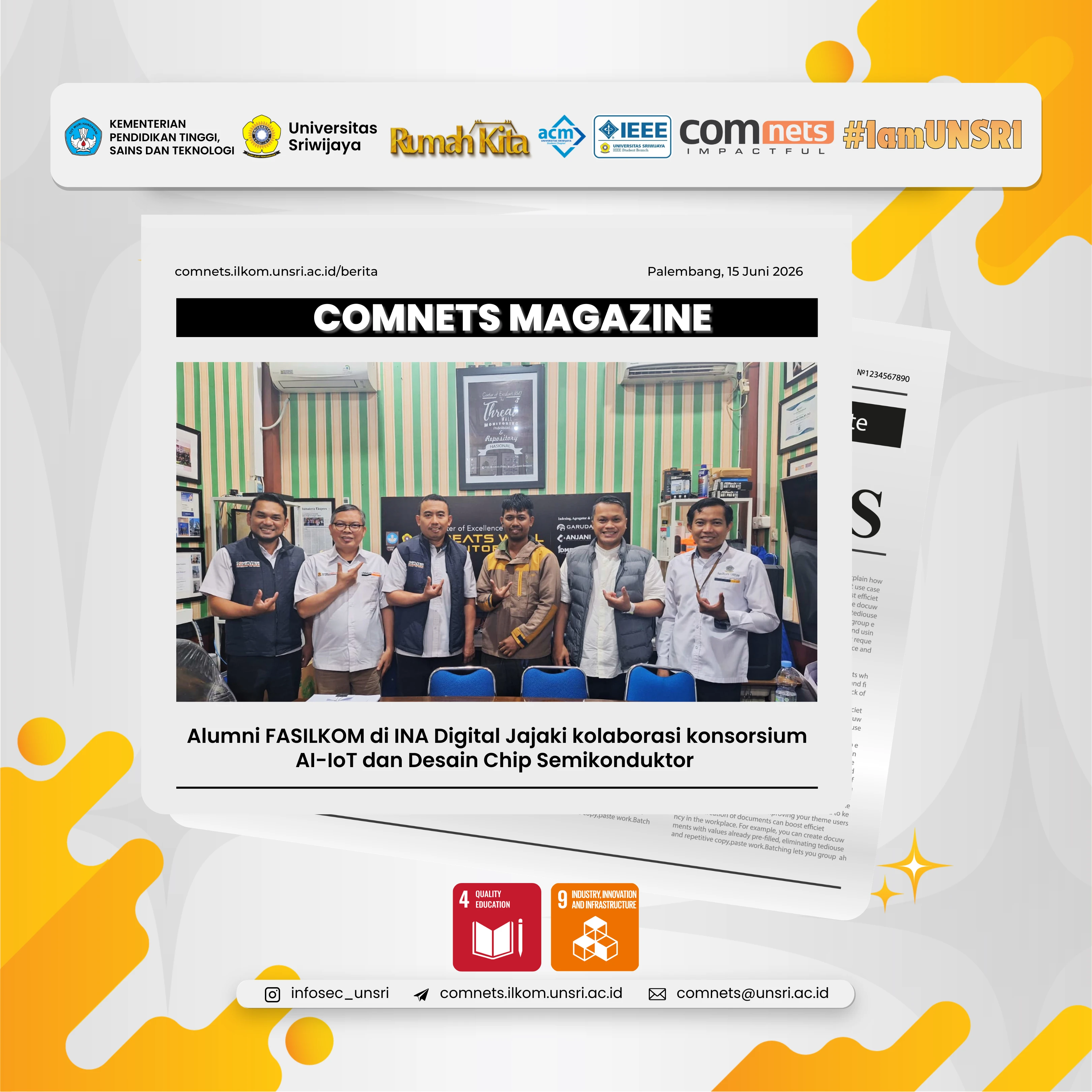
Palembang — Efforts to strengthen the national research and technological innovation ecosystem have received a fresh boost through an initial discussion that brought together alumni of Sriwijaya University (UNSRI)—who are now serving as key members of the PERURI team through the INA Digital initiative— with faculty members from UNSRI’s Department of Computer Systems and Computer Engineering.
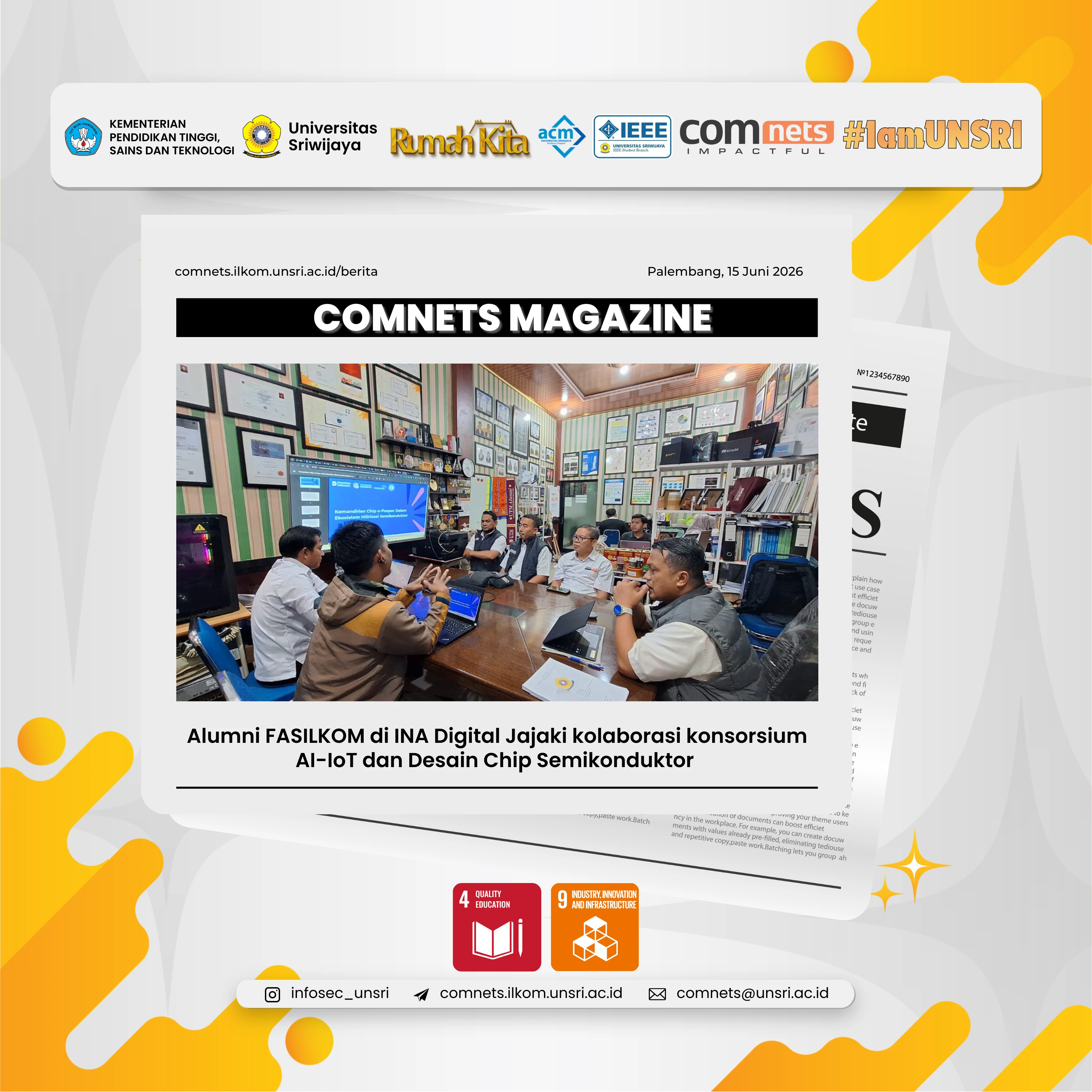
The discussion began with an exchange of insights on semiconductor technology development and efforts to achieve national technological self-reliance. During the event, PERURI outlined various strategic steps currently being taken to support the government’s program to strengthen Indonesia’s semiconductor industry. The company also highlighted its role and contributions to the development of domestic chip technology. One of the key focuses discussed was the development of Field-Programmable Gate Arrays (FPGAs) oriented toward the use of ARM processors. FPGA technology is considered to play a crucial role because it allows for the flexible design and testing of digital systems before entering the full-scale chip production phase. In attendance were Prof. Ir. Deris Stiawan, Ph.D., Head of the UNSRI Alumni Subdivision and lecturer in the FASILKOM Doctoral Program; Huda Ubaya, Secretary of the Computer Systems Department; and several lecturers from that department: Dr. Ir. Ahmad Heryanto, Dr. Ahmad Zarkasi, and Dr. Kemahyanto Exsaudi.
The session began with a discussion on the State of the Art (SOTA) and the chip development ecosystem. In this section, participants gained an overview of the latest developments in the global semiconductor industry, the challenges faced by Indonesia, and the need to build an ecosystem involving the government, industry, universities, and research institutions to create a sustainable technology supply chain. Next, the journey of chip development aimed at supporting the national electronic Machine Readable Travel Document (eMRTD) was presented. This initiative is part of efforts to strengthen technological self-reliance in the national identity and security document sector, while reducing dependence on imported technology.
One key point that emerged during the meeting was the idea of establishing an AI-IoT Center of Excellence (CoE) involving a consortium of universities. This Center of Excellence is expected to serve as a collaborative platform for research and development, innovation, and the strengthening of competencies in the fields of artificial intelligence, the Internet of Things, and semiconductor technology.
During the closing session, PERURI outlined the latest developments regarding the ongoing development of the national e-Passport chip. This strategic project is being carried out in four core phases, ranging from the design and requirements specification stage, chip design development, the validation and security testing process, to the implementation and integration stage into the national e-Passport system. Through these stages, PERURI hopes to deliver a technological solution that not only meets international security standards but also serves as a significant milestone in strengthening the self-reliance of Indonesia’s semiconductor industry.
Through a consortium approach, universities are expected to share resources, expertise, and research infrastructure so they can generate a greater impact on national technology development. Additionally, collaboration with industry and strategic institutions is considered crucial to ensure that research outcomes can be practically applied and address future needs. In conclusion, this meeting marks a promising first step in opening opportunities for research and technology development collaboration among academics, alumni, and industry. The initiative to establish a joint AI-IoT Center of Excellence with the university consortium is expected to serve as the foundation for strategic innovations that support Indonesia’s technological self-reliance, particularly in the fields of AI, IoT, and semiconductor chip design.
This meeting underscored the importance of collaboration between industry and universities in cultivating competent human resources and accelerating the mastery of strategic national technologies. For UNSRI, this event provided an opportunity for the academic community to gain firsthand insight into the development of the national semiconductor industry, while for INA DIGITAL, collaboration with the academic world represents a crucial step in building a sustainable innovation ecosystem in Indonesia.