
In recent years, the tech industry has seen remarkable advancements and a surge in adoption driven by the rise of Generative AI. The emergence of systems such as ChatGPT, Gemini, Grok, Claude, Deepseek, Qwen, Mistral, and others has not only transformed how humans interact with computers but has also blurred the line between tools and “thinking/discussion partners.” Even now, advancements are not limited to generative AI alone but are shifting toward AI Agents, where AI can act autonomously, make decisions, and perform complex tasks.
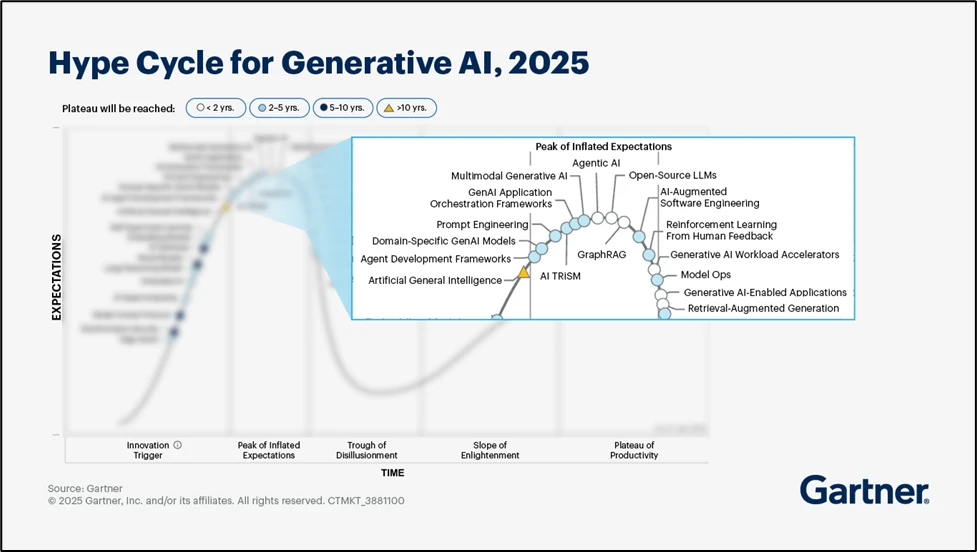
Figure 1. Hype Cycle for Generative AI, 2025 (Source: Gartner.com)
This phenomenon raises a major question: are we currently in an “AI Bubble” phase, or part of an inevitable technological evolution? This analysis attempts to examine the phenomenon reflectively—not only from a technological perspective but also from social and economic viewpoints.
The concept of the “AI Bubble” cannot be separated from the Gartner Hype Cycle framework, which explains that technological development generally goes through five main stages: technology trigger, peak of inflated expectations, trough of disillusionment, slope of enlightenment, and plateau of productivity [1]. This model illustrates how expectations regarding new technologies tend to rise significantly before declining, and then gradually reach a stable level of maturity and productivity.
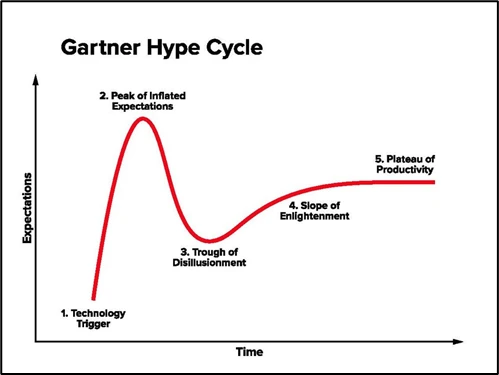
Figure 2. Gartner Hype Cycle (Source: Forbes.com)
Interestingly, several studies indicate that generative AI is in the “peak of inflated expectations” phase—a stage where public expectations are extremely high, often exceeding the technology’s actual capabilities [2]. Even recent studies on generative AI adoption rates suggest that this technology follows not only a technical cycle but also an emotional cycle, ranging from enthusiasm to confusion and ultimately adaptation [3]. In this context, the AI bubble is not merely an economic phenomenon but also a social one.
Generative AI is evolving at a pace rarely seen in the history of technology. According to a Stanford University report, global investment in generative AI has reached approximately $33.9 billion and continues to rise, while AI adoption within organizations has surged from 55% to 78% in just one year [4].
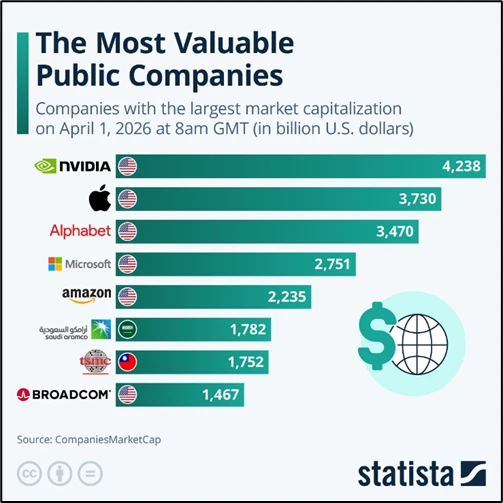
Figure 3. Global Companies with the Largest Investments in Artificial Intelligence Development (Source: Statista.com)
However, this surge is not limited to the technological level but also extends to evolving public expectations, such as
:• AI will replace most human
jobs• AI is capable of thinking like humans•
AI will become a universal solution to various problems
In reality, however, AI still has fundamental limitations such as data bias, errors (hallucinations), and dependence on the provided input. This phenomenon indicates that the current landscape is not only facing technological innovation but also a powerful wave of collective perception.
The Reality Behind the Hype: Between Hope and Disappointment
Despite the intense hype, in reality, AI implementation often falls short of expectations. Several reports indicate that many AI projects have yet to deliver significant impacts on productivity or profit. This reinforces the indication that the current phase is entering a “disillusionment” stage, where organizations are beginning to realize that AI implementation is not as straightforward as imagined. In fact, many companies face challenges such as:
• Complex
system integration• Inadequate data
quality• Organizational
adaptation needs• Ethical and security risks
This phenomenon aligns with studies noting that waves of technological hype are often followed by a correction phase before reaching maturity [5]. However, it is important to note that correction does not mean failure but rather a process toward stability.
AI Agents: The Next Evolution or a New Bubble?
While generative AI focuses on “creating,” AI Agents go a step further by “acting.” An AI Agent is a system that not only generates output but can also make decisions, perform repetitive tasks, and interact with other systems autonomously. This concept has significant implications for the future of work and organizations. However, on the other hand, AI Agents also have the potential to create a new wave of hype.
The question is: are AI Agents truly ready, both technically and socially?
History shows that every wave of technology brings great promises, yet not all are immediately realized. Therefore, AI Agents can be viewed as two things at once: the logical evolution of AI and the potential for the next bubble if expectations once again spiral out of control. So, is this a bubble or an evolution? The answer to this question is not as simple as “yes” or “no.”
Current AI development has a stronger foundation compared to previous bubble eras like the “dot-com” era[6]. The investments flowing in are not entirely speculative but are also driven by real needs and productivity potential[7]. On the other hand, the current hype patterns closely resemble historical technology bubble phenomena. This suggests that the current development is likely in a “hybrid” state—combining bubble elements (overhype, high expectations) with evolutionary elements (real, continuously advancing technology). In other words, it is not the technology itself that is the bubble, but how humans interpret it.
The euphoria surrounding Generative AI and AI Agents ultimately reveals that what is unfolding is not merely technological progress, but a reflection of human hopes, fears, and expectations regarding the future. The term “AI Bubble” may be overly simplistic, but ignoring the potential for overhype is not without risk. Amid the torrent of innovation, what is needed is not an extreme stance—whether overly optimistic or overly skeptical—but a balanced approach to viewing and addressing it. AI must be understood critically, without getting caught up in the hype, yet without closing oneself off to its potential. Ultimately, the direction of AI’s development is determined not only by the sophistication of its algorithms and hardware, but by human choices in using it—whether as a tool, a companion, or merely an illusion.
Reference:
[1] J. Werner, “The trough of disillusionment and four outliers on the Gartner hype cycle,” Forbes, Jul. 18, 2024. [Online]. Available: https://www.forbes.com/sites/johnwerner/2024/07/18/the-trough-of-disillusionment-and-four-outliers-on-the-gartner-hype-cycle/
[2] R. Wandile, “Gartner places generative AI at the top of the hype cycle: What does it mean for the technology?,” LinkedIn, Sep. 12, 2023. [Online]. Available: https://www.linkedin.com/pulse/gartner-places-generative-ai-top-hype-cycle-what-does-rahul-wandile/.
[3] V. Truong, “Hype and Adoption of Generative Artificial Intelligence Applications,” 2025, arXiv. https://doi.org/10.48550/arXiv.2504.18081.
[4] Maslej, N., Fattorini, L., et al. (2025). Artificial Intelligence Index Report 2025 (Version 3). arXiv. https://doi.org/10.48550/ARXIV.2504.07139.
[5] Taherdoost, H. (2025). From hype to bubble: a historical analysis of technology trends and the case for artificial intelligence. Future Digital Technologies and Artificial Intelligence, 1(1), 1–6. https://doi.org/10.55670/fpll.fdtai.1.1.1.
[6] Janus Henderson Investors, “AI versus the dotcom bubble: 8 reasons the AI wave is different,” Oct. 16, 2025. [Online]. Available: https://www.janushenderson.com/corporate/article/ai-versus-the-dotcom-bubble-8-reasons-the-ai-wave-is-different/
[7] E. Brynjolfsson, D. Rock, and C. Syverson, “Artificial Intelligence and the Modern Productivity Paradox,” The Economics of Artificial Intelligence. University of Chicago Press, pp. 23–60, 2019. https://doi.org/10.7208/chicago/9780226613475.003.0001.