
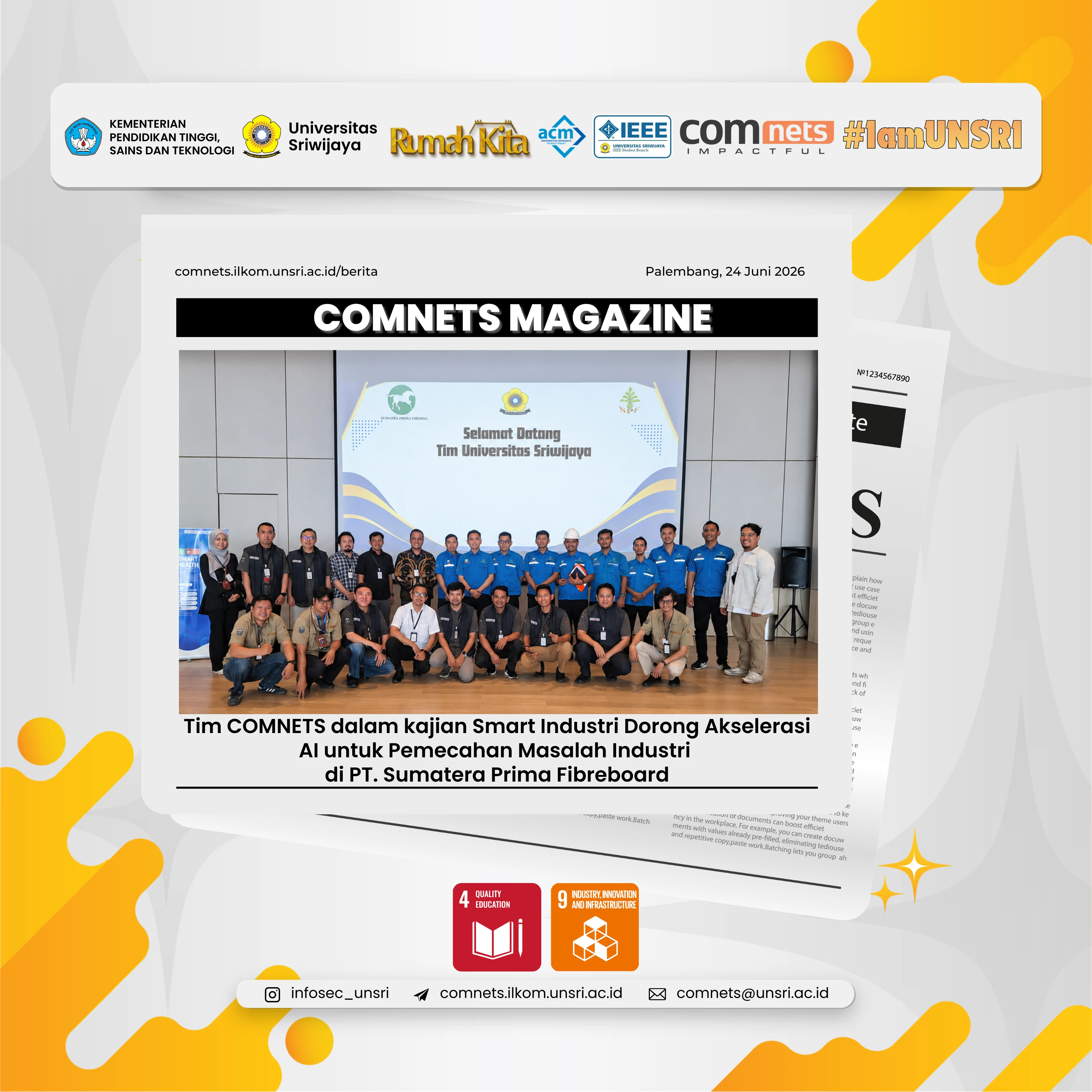
On June 24, 2026, the commitment of academics to bridge the gap between cutting-edge technology and the real needs of the manufacturing industry was once again demonstrated, as a team from the Faculty of Computer Science within the COMNETS-SPCIES Group took strategic steps to drive digital transformation in the manufacturing sector. Through community service and technological collaboration, the team of experts explored the use of Artificial Intelligence (AI) to optimize operations at the PT Sumatera Prima Fibreboard (SPF) factory in Indralaya. This initiative marks a serious effort by academics to bridge the gap between cutting-edge theory and the real-world needs of this export-scale fiberboard industry.
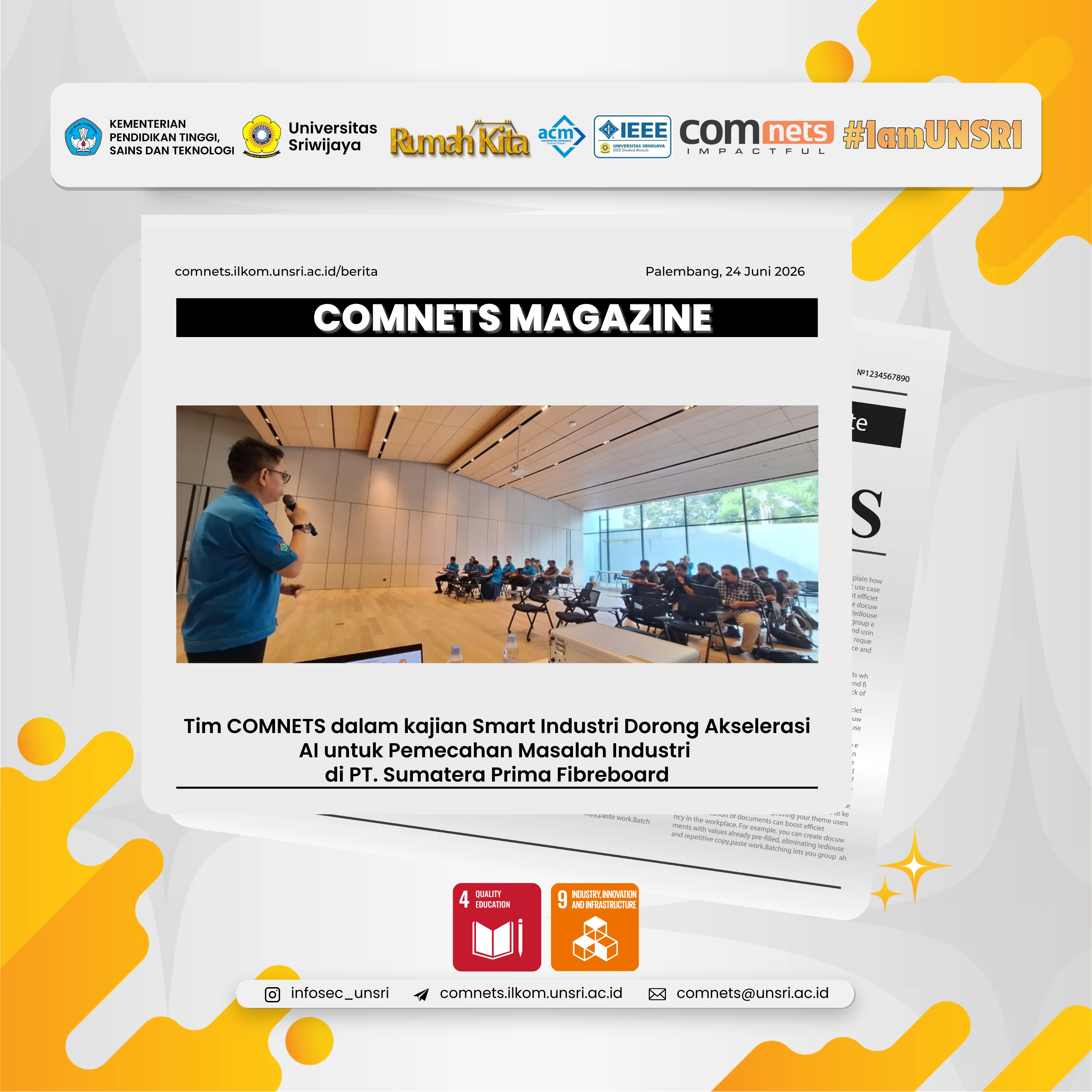
The official opening was led by Faisal Mardanita (HRD Manager at PT SPF), who warmly welcomed the COMNETS-SPCIES Lab team’s initiative to share knowledge and foster synergy in identifying and resolving issues within PT SPF’s daily operations. He also discussed the collaboration and activities carried out so far with UNSRI, particularly regarding the recruitment of UNSRI alumni, which led to this event, he added. He then introduced the team members present from PT. SPF: Ahmed Redi Aulawi (IT Supervisor), Dedi Riduan (IT Programmer), Saiful Abror (Preventive Maintenance Supervisor Electrical), Setiawan Margo Waluyo (Electrical), Ricky Adrian Bessie (Senior Procurement Supervisor), Arliza Nurul Ramadhani (Production Staff), Agus Priyadi (Senior Supervisor, MDF & WPA), Ridho Nanda (Deputy GA Manager), T Agung Laksana (Deputy SHE Manager), Danar Hadi (Senior HR Operations Supervisor), Desiana (Training Officer), Faisal Martadinata (HR Manager), Dewangga Ramanda Putra (HR Development Supervisor), and Agus Suwetri (Maintenance Manager).
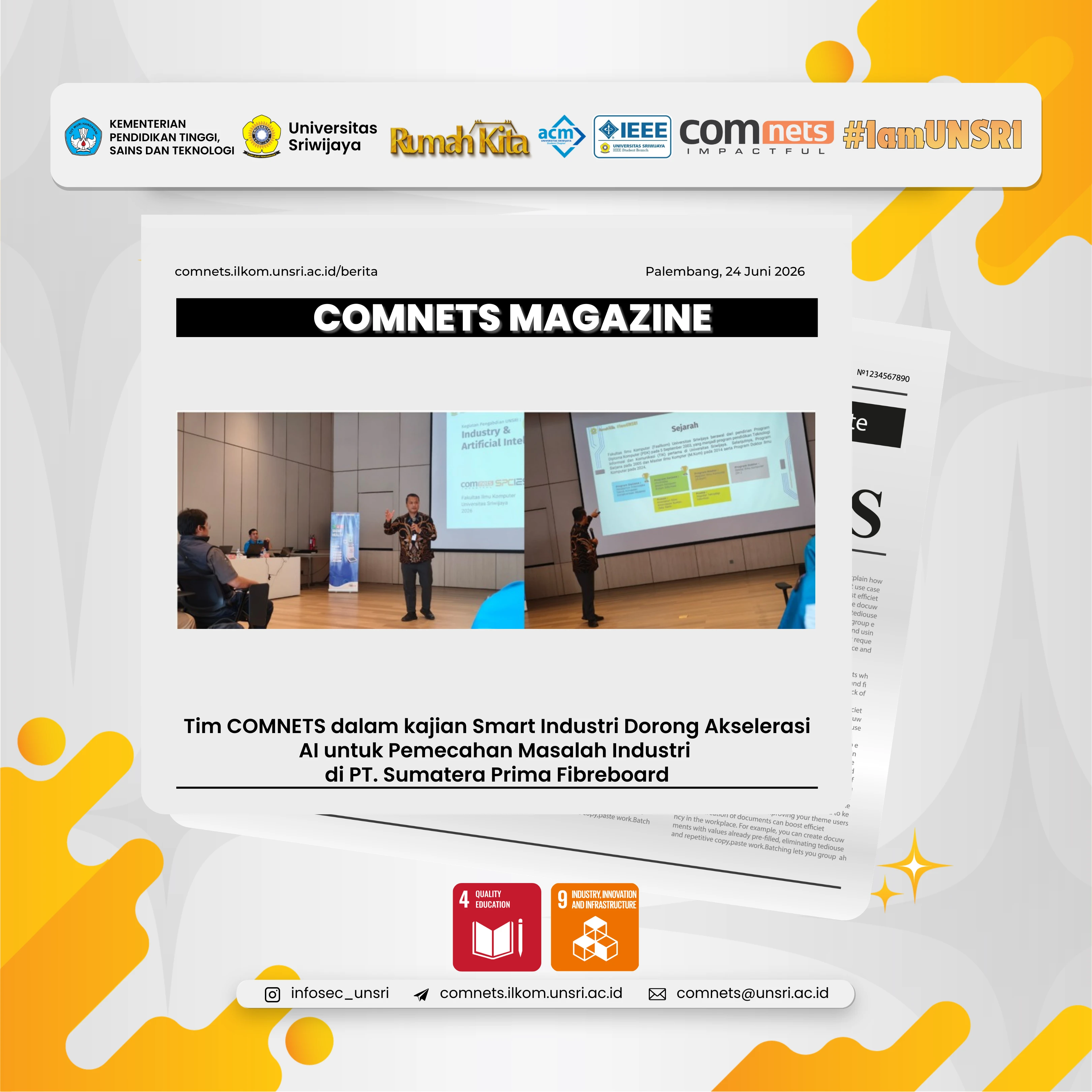
Next was Prof. Ir. Deris Stiawan, Ph.D. (Professor in the Doctoral Program in Computer Science), who stated that this event focuses on accelerating Artificial Intelligence (AI) and Smart Industry technologies to address various operational challenges. It also embodies the spirit of impactful innovation, in line with Sriwijaya University’s status as a State University with Legal Entity Status (PTN BH), which is required to actively provide scientific solutions for local and national industries. In the Industry 4.0 era, which demands high efficiency, the adoption of Artificial Intelligence (AI) is no longer merely an option but an absolute necessity. Recognizing this, a team of experts from the UNSRI Faculty of Computer Science (Fasilkom) examined four crucial technological pillars poised to revolutionize factory operations.
The presentation also highlighted the journey of UNSRI’s Faculty of Computer Science, which—supported by a comprehensive educational ecosystem ranging from diploma, bachelor’s, and master’s programs to the Doctoral Program in Computer Science established in 2024—has deployed its top team of experts to guide PT. SPF toward the era of the Smart Factory. Leveraging expertise in Artificial Intelligence, Data Science, and the Internet of Things (IoT), the research team is working to convert physical problems on the ground into cognitive data models that can be automated.
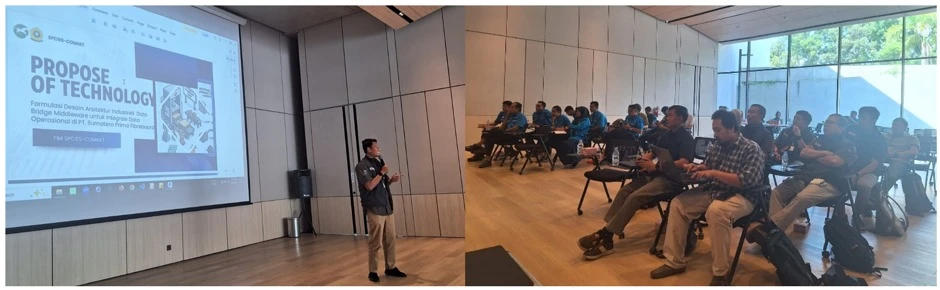
In the first session, Abdurahman, M.Han, and Ferlian Seftianto, M.Kom. (Computer Systems program) served as the research team, focusing on Smart Industry automation within an interoperability framework that emphasizes the integration of digital technology, sensors, the Internet of Things (IoT), and artificial intelligence into production processes. Through this approach, companies are expected to improve efficiency, reduce reliance on manual processes, and gain better real-time visibility into operational conditions. The concept of middleware for data exchange between devices was central to this session, highlighting the importance of cross-system data management and integration—which has long been a challenge in industrial environments. The Smart Industry team explained how interoperability enables faster, more accurate, and standardized data exchange between work units, thereby supporting data-driven decision-making.
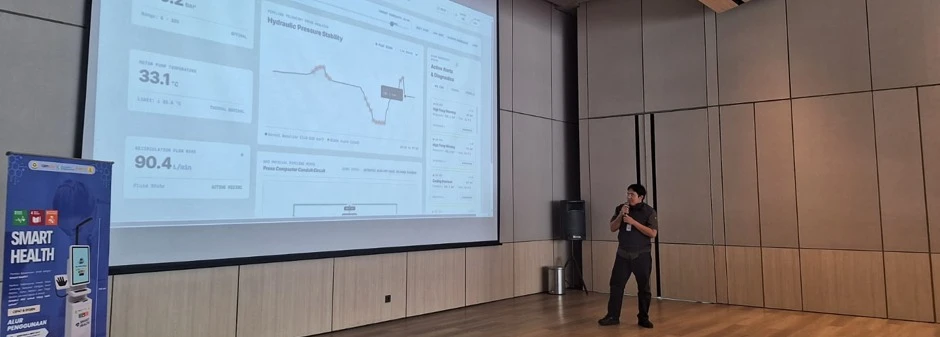
The second presentation, delivered by Ricy Firnando, M.Kom (Computer Engineering Program), covered the development of a User Interface (UI) for visualizing and monitoring industrial data. It demonstrated how an interactive dashboard can present information on production, machine performance, quality indicators, and other operational parameters in a way that is easily understood by users, with data obtained in real time or captured from the data streams generated by each machine. With the right visualization, management and operators can monitor factory conditions more effectively and respond to potential issues more quickly.
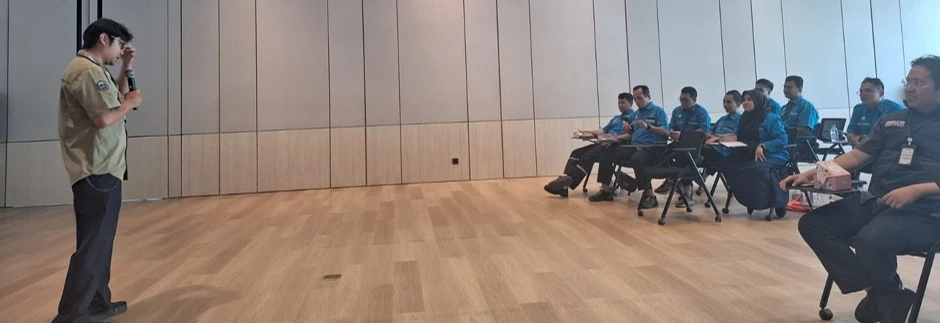
In the next session, participants were introduced to the use of AI-based chatbots as a means of automating expert knowledge within a corporate environment, presented by Danny Matthew Saputra, S.T., M.Sc (Computer Systems Program) and Dr. Qurhanul Rizkie (Information Management Program), who explained the latest approaches to supporting Enterprise Data Management, particularly in the management of archives, documentation, operational procedures, and the corporate knowledge base. Through the chatbot, users can quickly access relevant information without having to manually search through documents scattered across various storage systems. Additionally, this technology is designed to transform Standard Operating Procedure (SOP) documents into a digital knowledge base that can be accessed interactively via a chatbot. By leveraging generative AI technology, users can obtain information on work procedures quickly, accurately, and consistently without having to manually search through documents.
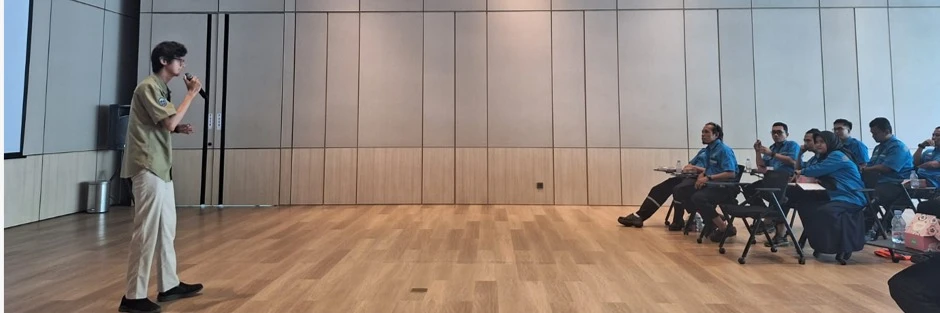
The fourth session discussed prompt engineering practices, presented by Iman Saladin B Azhar, M.MSi (Computer Systems program), and their application in industrial systems. The Smart Industry team explained that the quality of AI output is heavily influenced by how users formulate instructions, or prompts. Various case studies were presented to demonstrate how proper prompt engineering techniques can assist with data analysis, report generation, technical information retrieval, and even support decision-making processes in industrial settings. The session included an example of building an HRIS (Human Resources Information System) platform, a project that will also be carried out in collaboration with Nurul Afifah, M.Kom.
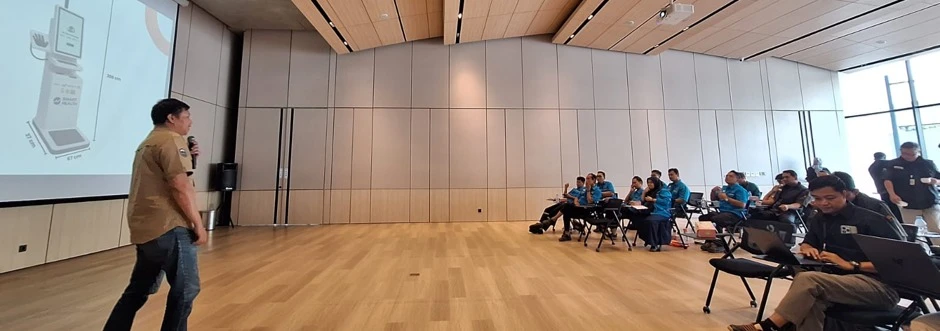
In the final session, Ph.D. candidate Adi Hermansyah, M.T. (Computer Engineering program), discussed the Smart Cyber-Physical System (Smart Health) device. He explained that this device relies on artificial intelligence (AI) and the Internet of Things (IoT), and is capable of measuring six essential health parameters simultaneously in real time: oxygen saturation, heart rate, blood pressure, body temperature, height, and weight. All of this sensor data is processed by AI algorithms to provide an instant clinical overview, and the real-time data can be sent to other systems or existing platforms. Dr. Ir. Ahmad Heryanto (Computer Engineering program) also explained that this device has already been installed at several healthcare facilities, such as community health centers and RSMH. The presence of this device represents a tangible commercialization of research results, underscoring that relevant parties are highly committed to adopting local technology.
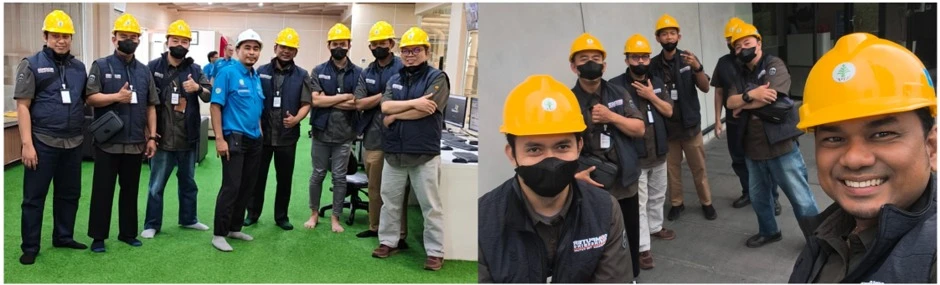
The Smart Industry team also visited the Central Production Room to gain insight into the concept of predictive optimization of product failures based on Agentic AI, under the coordination of Dr. Ahmad Zarkasi, Dr. Kemahyanto Exsaudi, Aditya Putra Perdana Prasetyo, M.T., and Rahmat Fadli Isnanto, M.Sc. (Computer Engineering program). This approach utilizes artificial intelligence agents capable of analyzing production data, identifying anomalous patterns, and proactively providing recommendations to prevent potential product failures. Agentic AI technology is considered to have great potential in supporting predictive quality and predictive maintenance systems, which are increasingly needed by modern industry, as explained by Huda Ubaya, M.T., Secretary of the Department of Computer Systems, who accompanied the delegation during the visit.
This collaboration between the Faculty of Computer Science at UNSRI and PT. Sumatera Prima Fibreboard serves as concrete evidence that advanced artificial intelligence research does not remain merely on paper but can serve as a driving force for efficiency and the digitalization of the manufacturing industry in South Sumatra. The full implementation of Agentic AI technology on the production floor is eagerly anticipated.
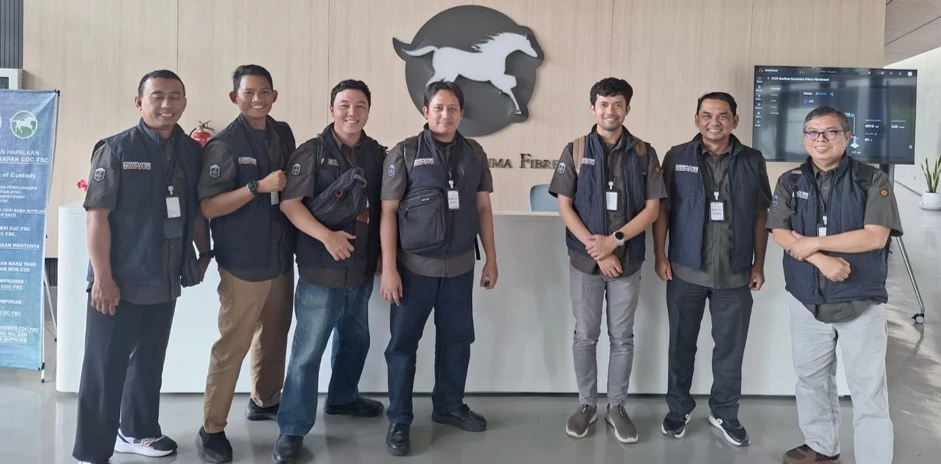
At the end of the session, PT. Sumatera Prima Fibreboard’s management warmly welcomed this collaboration. Through an interactive approach that included presentations on the activity’s themes, two-way discussions, and brief demonstrations of the smart system’s capabilities, it is hoped that critical challenges on the production floor—such as raw material optimization, predictive maintenance, and energy efficiency—can be intelligently resolved using AI technology. The implementation of AI at PT Sumatera Prima Fibreboard is driven by a global industrial paradigm shift that demands high levels of efficiency. According to global trend reports such as the Future of Jobs Report, modern competencies—including analytical thinking, technological literacy, and proficiency in AI and Big Data—are now the key pillars that determine a company’s competitiveness.