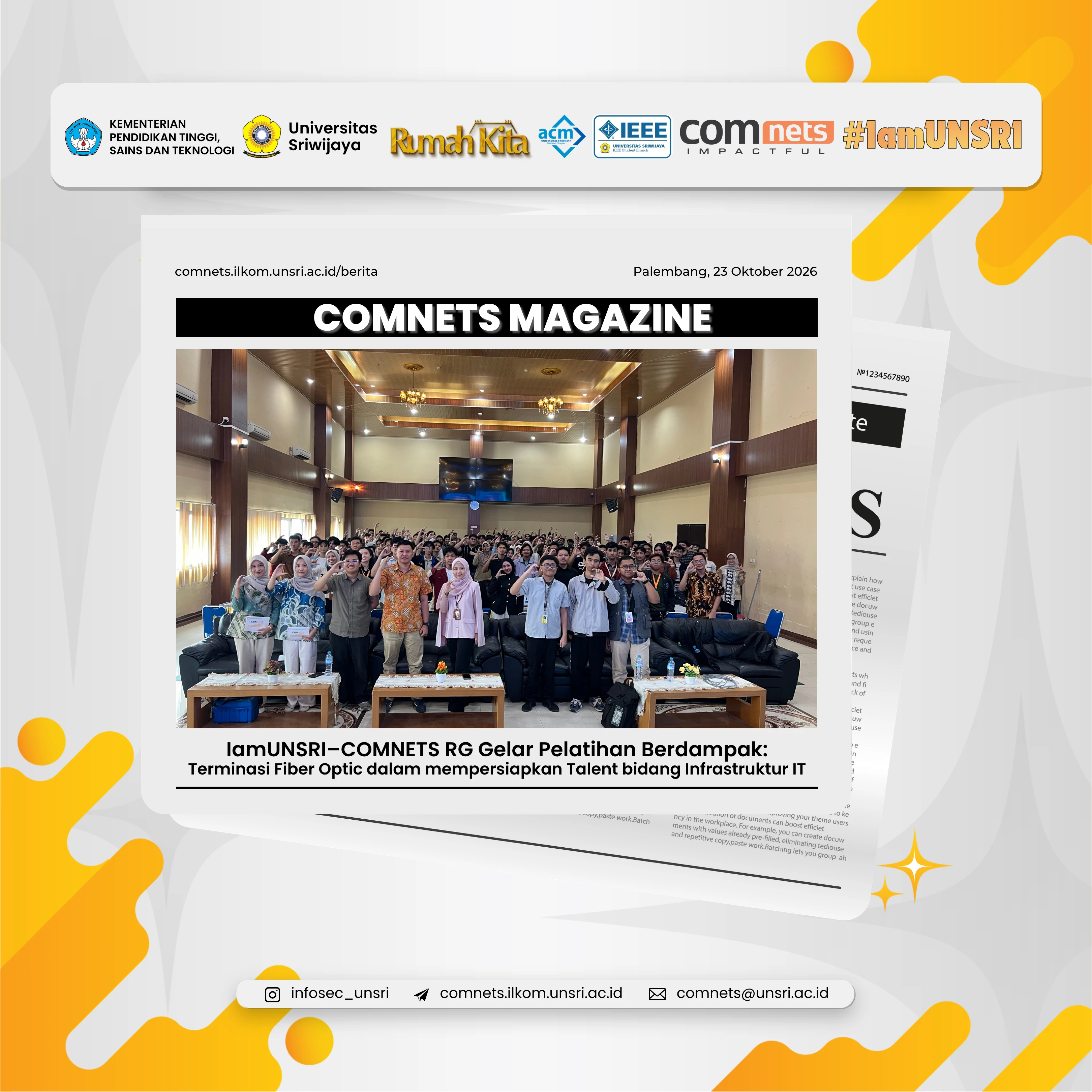
The COMNETS Research Group at the Faculty of Computer Science (FASILKOM) of UNSRI, in collaboration with IAMUNSRI—a program of the CDC Subdirectorate of Alumni, Directorate of Cooperation, Internationalization, and Alumni (DKIA) at Sriwijaya University, organized an academic event titled “How to Perform Fiber Optic Termination.” This regular event serves as a learning platform for students to strengthen their understanding and enhance their practical skills in the fields of computer networking and fiber optic technology.
Held in the Auditorium of the FASILKOM UNSRI Training Building in Bukit Besar, the event was structured into two main sessions: a theoretical presentation and a hands-on fiber optic termination lab. Through a learning approach that combines theory and practice, participants are expected to understand the splicing process, the use of equipment, and the handling of fiber-optic cables in accordance with the correct procedures.
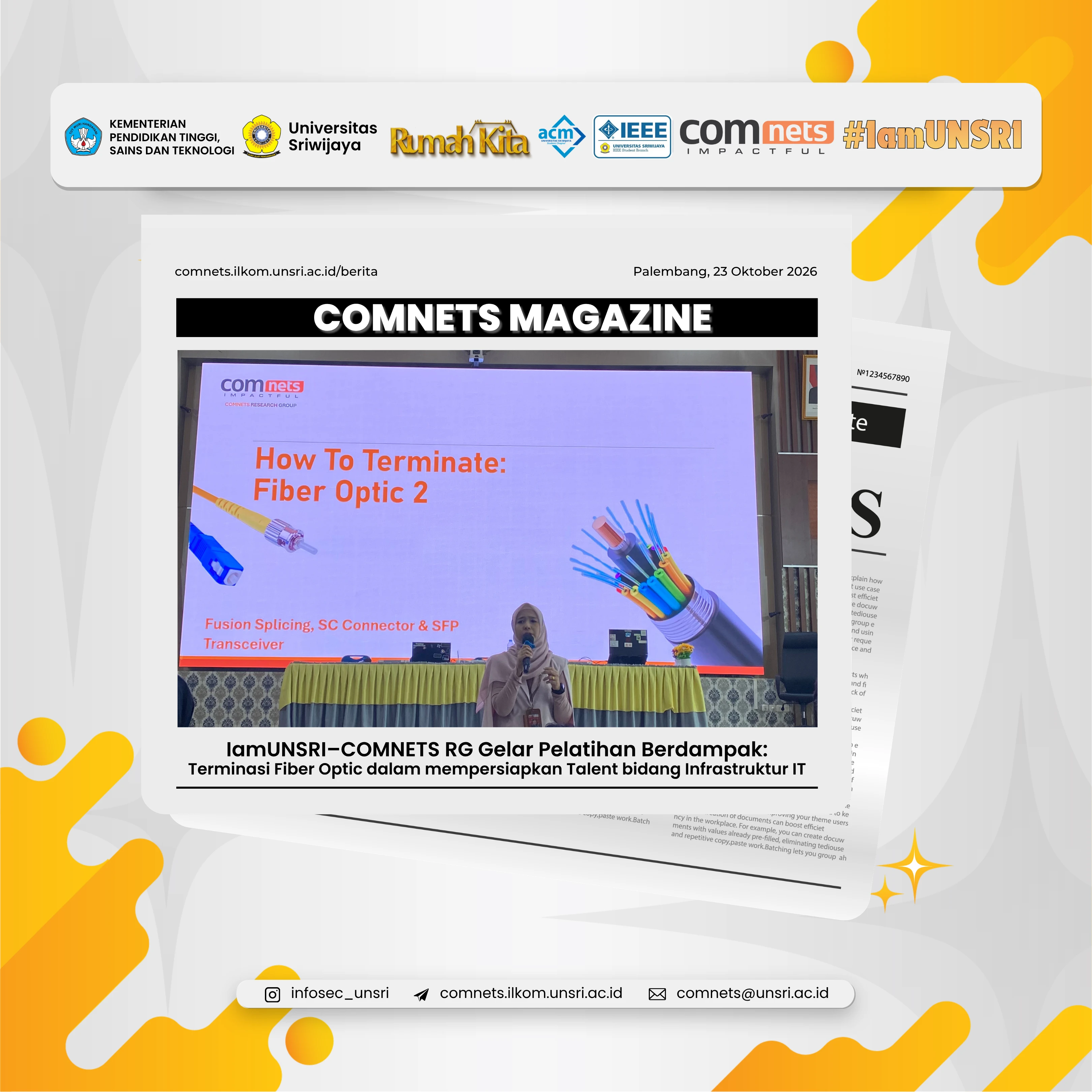
The theoretical session featured two speakers from IAMUNSRI: Nurul Afifah, M.Kom., a lecturer in the Computer Systems Study Program at FASILKOM UNSRI, and Adi Hermansyah, M.T. (Ph.D. candidate at the Faculty of Engineering, UNSRI), a lecturer in the Computer Engineering Program at UNSRI. Both are part of the core research team of the COMNETS Research Group. In their presentations, the speakers explained the basic concepts, functions, equipment, and steps involved in the three fiber-optic termination techniques: fusion splicing, connectors, and Small Form-factor Pluggable (SFP).
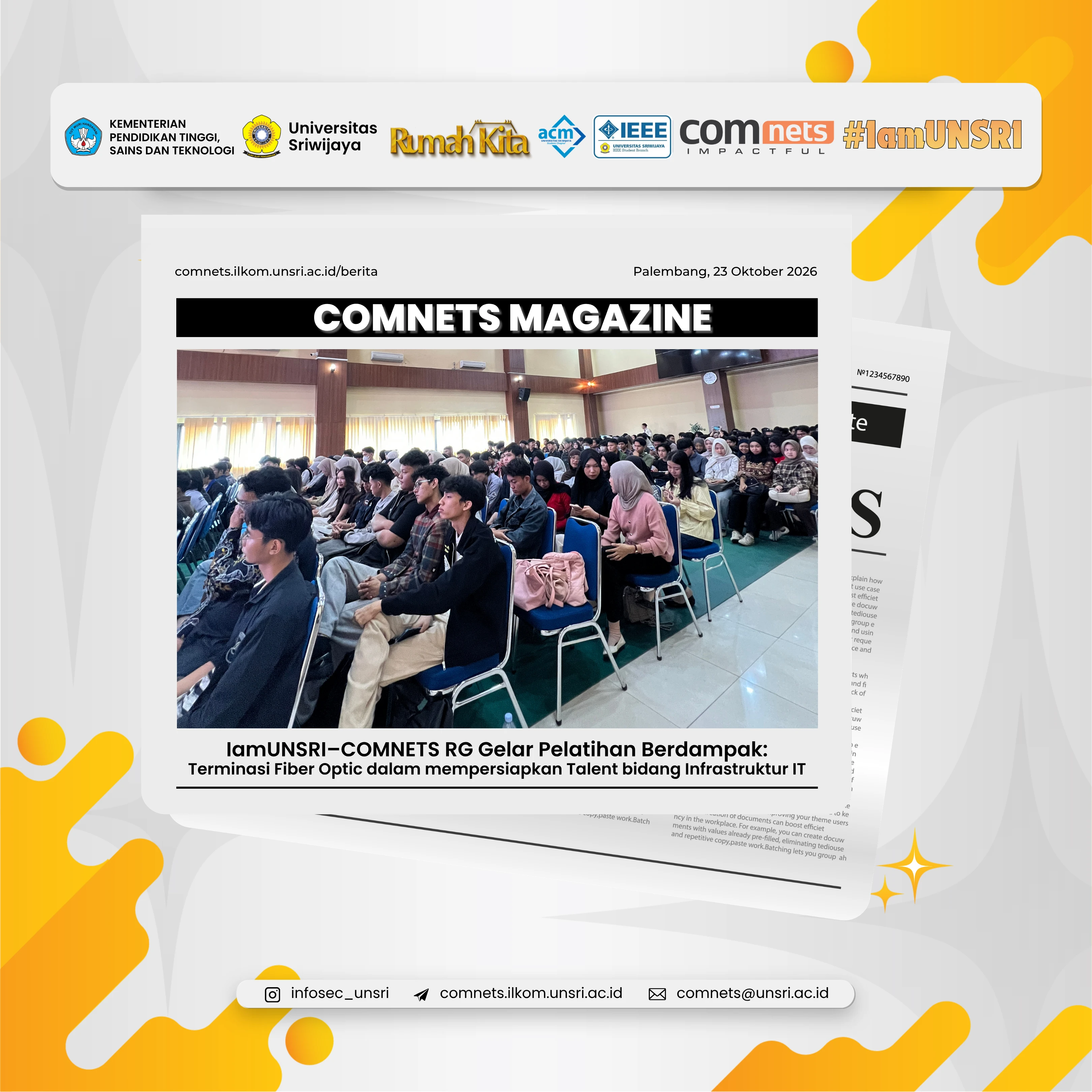
This event was attended by more than 100 students enrolled in the Computer Networks course from the Computer Systems, Information Systems, and Computer Engineering programs. The participants’ enthusiasm in taking part in the series of activities underscored the importance of practice-based learning in supporting the mastery of technical competencies, particularly in the fields of network infrastructure and data communication.
Following the theoretical session, the activity continued with a hands-on lab where participants were divided into groups based on the termination technique they were studying. Each group was mentored by students who had previously participated in the Fiber Optic Termination Training of Trainers (ToT) program. This mentorship allowed participants to receive direct guidance, ranging from equipment familiarization to hands-on termination practice.
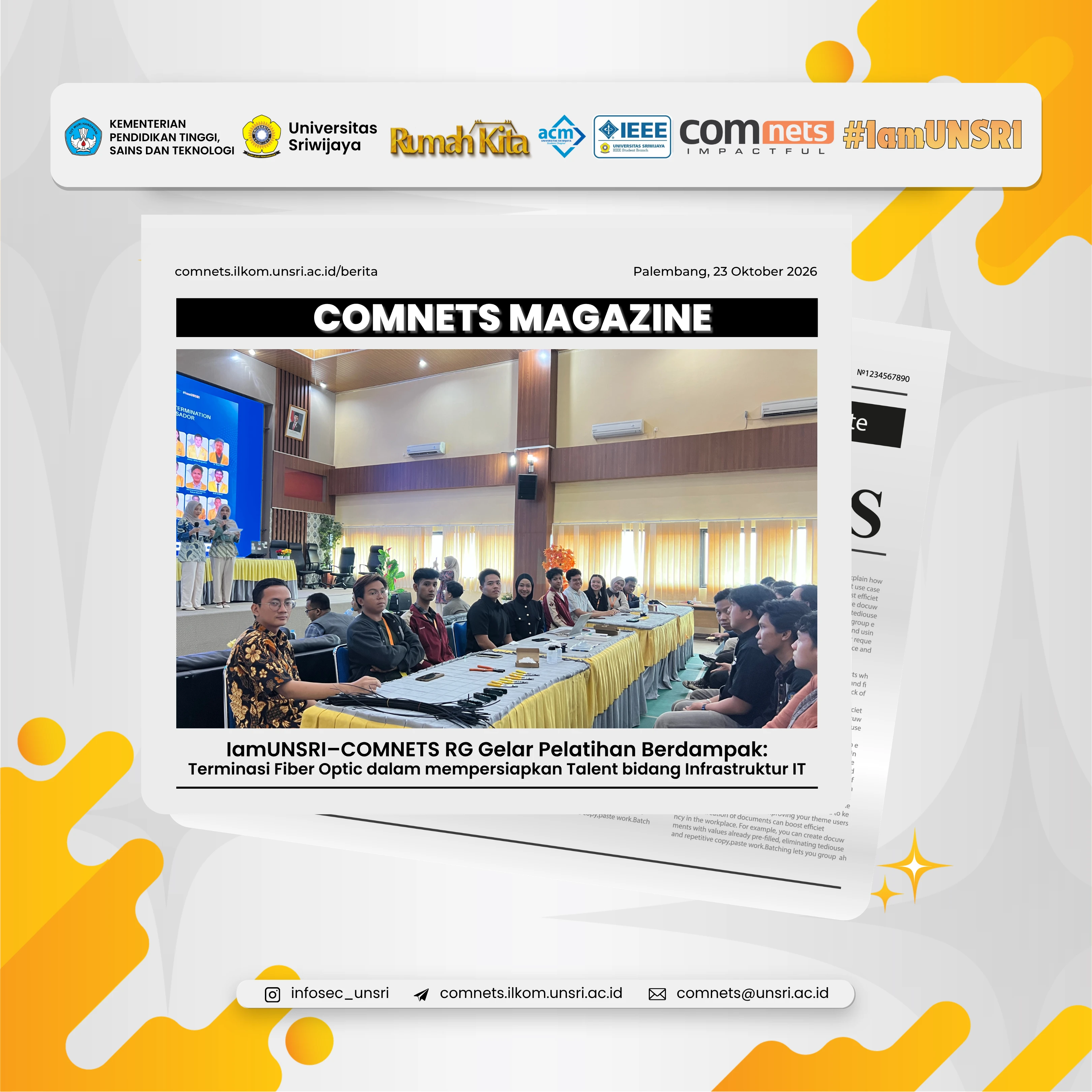
In the fusion group, the hands-on session was led by Nabila, Floreetha Tiara Cantika, Muhammad Rasyad Aqila Faza, Akbar Wida Nugraha, and M. Raja Faiz. The mentors guided participants in familiarizing themselves with the equipment and practicing the steps for splicing optical fibers using the fusion technique.
Meanwhile, the SFP group was mentored by Zahid Wazifa, Ridho Hidayah Putra, Raihan, Randy, and Rafi Afdhal. The connector group was led by Paulus, Ammar, Nazlia, Mohammad Arief Akbar, and Muhammad Daffa Zaidan S. In each group, the instructors provided guidance on the use of tools, the work procedures, and the technical aspects that needed to be considered to ensure the termination process was carried out correctly.
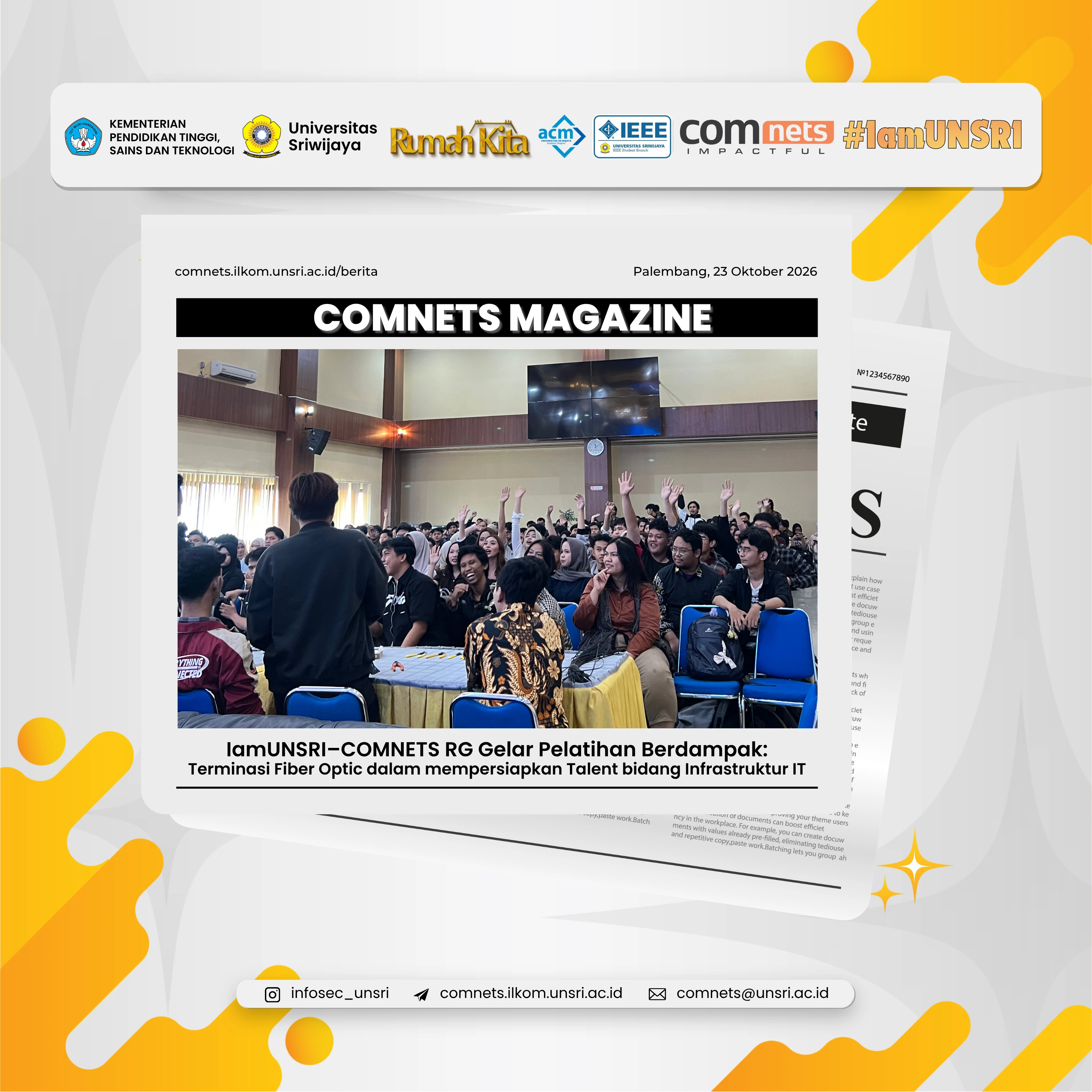
This activity serves as a practical application of the course material from the Computer Networks course, providing hands-on experience relevant to mastering networking technology. Students not only gain conceptual understanding but also have the opportunity to learn about and practice fiber optic termination techniques firsthand.
Through the collaboration between IAMUNSRI by CDC (Alumni Sub-Directorate of DKIA UNSRI) and the COMNETS Research Group at FASILKOM UNSRI, the “How to Perform Fiber Optic Termination” activity is expected to continue serving as a platform for competency development, knowledge sharing, and the strengthening of students’ technical skills. This synergy also supports Sriwijaya University’s efforts to prepare young talent who are adaptable to technological developments and possess the competencies required in the workforce, particularly in the fields of computer networking and communication technology.