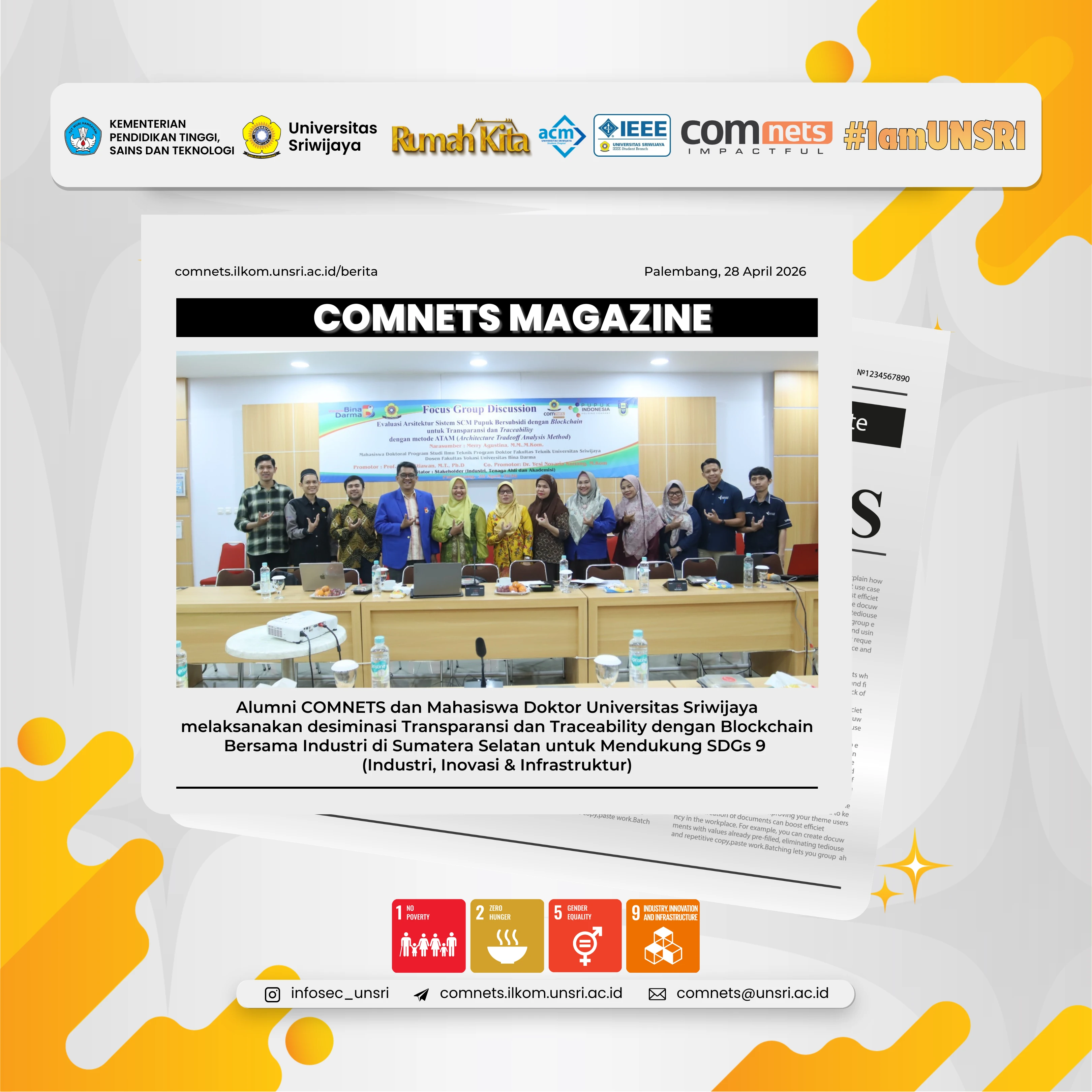
Efforts to improve transparency and accountability in the distribution of subsidized fertilizer continue to be a priority for the government and stakeholders in the agricultural sector. One innovative approach currently under consideration is the implementation of blockchain technology in the supply chain management (SCM) system for subsidized fertilizer. To ensure that the proposed system architecture meets the expected quality requirements, an evaluation was conducted using the Architecture Tradeoff Analysis Method (ATAM).
To that end, a number of alumni and doctoral students in the Informatics program at the Doctoral Program in Engineering, Faculty of Engineering, University of Sriwijaya, held a scientific dissemination event discussing the use of blockchain technology to improve transparency and traceability in the distribution of subsidized fertilizer. This event took place in Palembang and involved strategic collaboration with Pupuk Indonesia. This event is part of the dissertation completion process for candidate Merry Agustina, M.M., M.Kom., a doctoral student at Sriwijaya University, with Prof. Ir. Deris Stiawan, MT., Ph.D., IPU., ASEAN Eng., as the supervisor, and Dr. Yesi Novaria Kunang, S.T., M.Kom., as the co-supervisor.
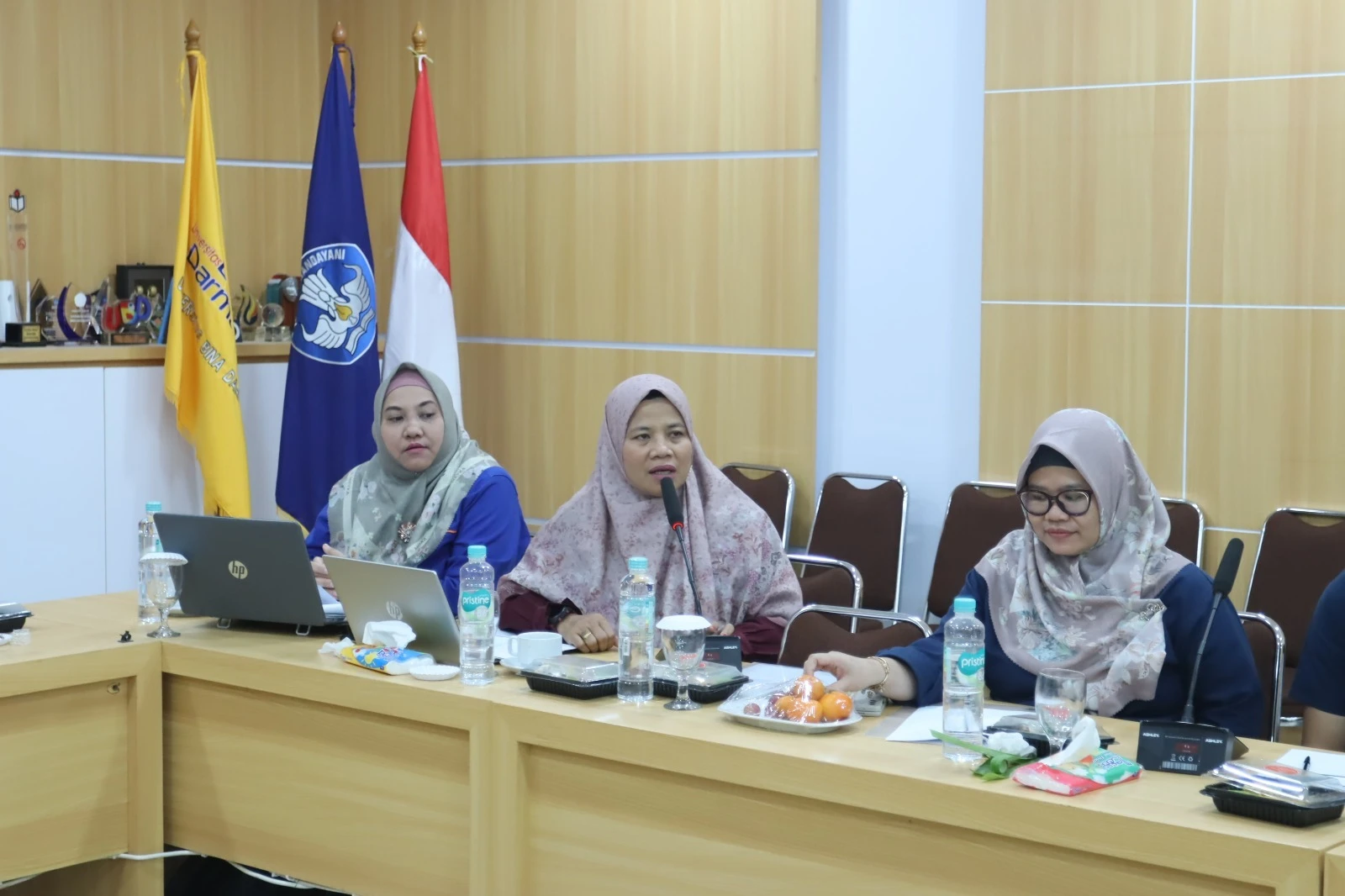
The event also featured various stakeholders, including representatives from both industry and academia. Industry representatives came from PT Pupuk Indonesia Holding Company, while the academic participants included doctoral students Mgs. Afriyan Firdaus and Dendi Renaldo Permana, whose research focuses on Web 2.0 in Blockchain and smart contracts at Sriwijaya University (UNSRI). Also present were UNSRI doctoral alumni Dr. Ery Hartati, who is currently active at Multi Data University in Palembang, and Dr. Agustina, affiliated with Indo Global Mandiri University (UIGM).
This blockchain-based system design aims to create a transparent, secure, and traceable distribution mechanism from upstream to downstream. Every transaction—from producers, distributors, to farmers—is recorded in an immutable distributed ledger. Thus, the potential for irregularities such as distribution fraud or data manipulation can be minimized.
During the forum, the presenter shared the latest research findings on the application of blockchain in fertilizer supply chain systems. This technology is considered capable of creating a distribution tracking system that is more open, secure, and resistant to manipulation. Every process, from production to distribution to farmers, can be tracked in real-time through a distributed ledger-based system. Evaluating the architectural design of a Blockchain-based Subsidized Fertilizer Supply Chain Management (SCM) System using the ATAM methodology.
During the ATAM evaluation process, the analyst team identified key quality attributes, such as security, performance, scalability, and usability. Use cases were developed to test how the system responds to real-world conditions, such as transaction spikes during planting season or the need for rapid data verification in remote areas.
Beyond technical presentations, this dissemination event served as a platform for exchanging ideas between academics and industry practitioners. The doctoral students also presented their system architecture evaluation approach, including the use of analytical methods to ensure that the designed solution is not only innovative but also reliable and sustainable. Through this collaboration, concrete steps toward digital transformation in the management of subsidized fertilizer in Indonesia are expected to emerge. Synergy between the academic and industrial sectors is considered key to delivering a distribution system that is more transparent, accountable, and targeted for farmers.
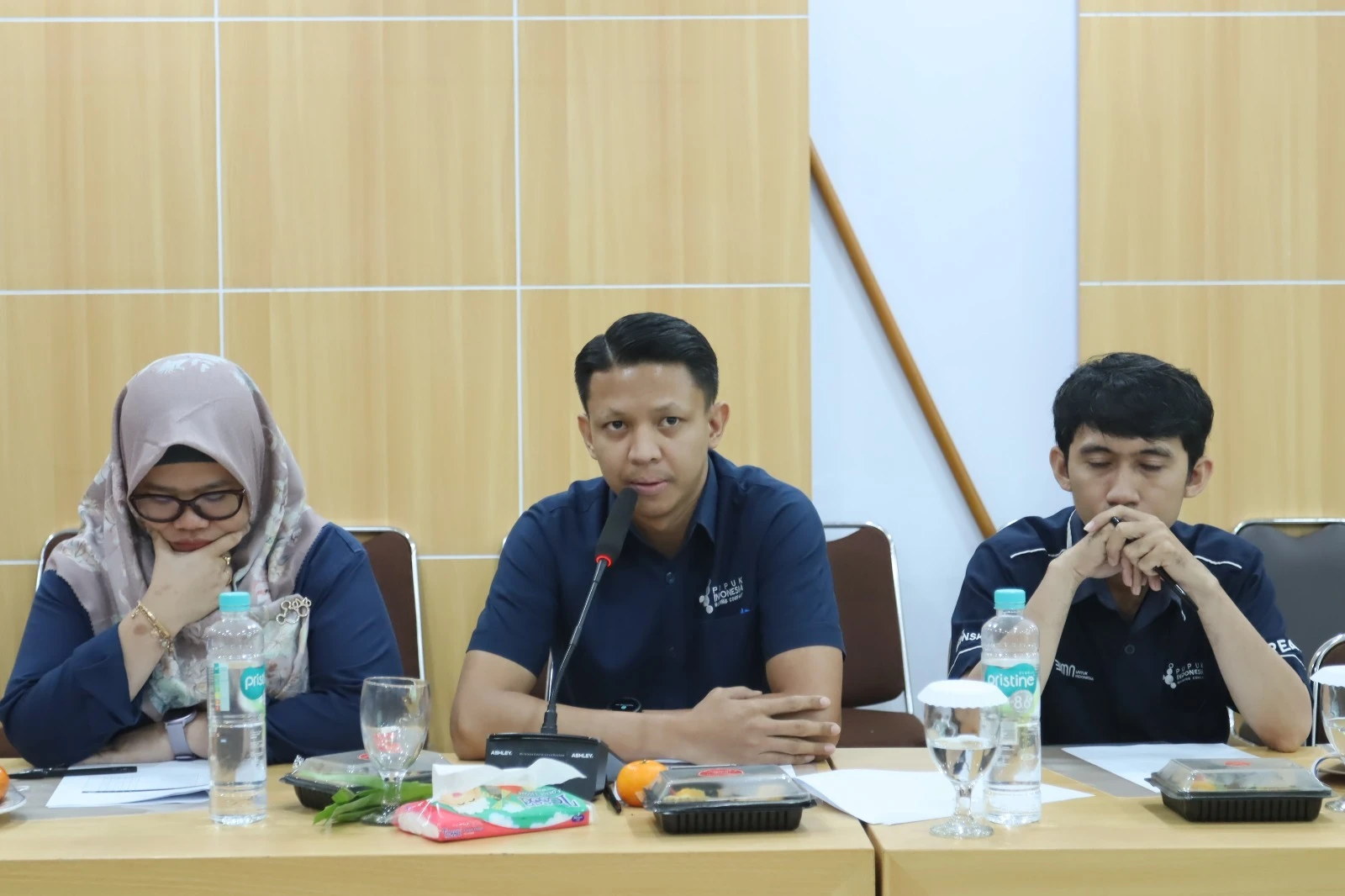
Representatives from Pupuk Indonesia welcomed this initiative positively and noted that digital-based innovations are urgently needed to address the challenges of subsidized fertilizer distribution, which has long been prone to misallocation. The discussion also highlighted the importance of integrating technology with existing systems, as well as the readiness of infrastructure and human resources to support blockchain implementation. Evaluation results indicate that blockchain technology offers significant advantages in terms of transparency and traceability. During the event, representatives from the industry—specifically the sales team of PT Pupuk Indonesia Regional 1B, which oversees the regions of South Sumatra, Jambi, Bengkulu, Bangka Belitung, and Lampung—provided an overview. As an initial snapshot, in South Sumatra alone there are over 530 retail outlets serving more than two million farmers. Stakeholders asked whether this system could securely store large amounts of data and how the business process would work. Essentially, they welcomed the blockchain system designed to support transparency and traceability in the distribution of subsidized fertilizer.
On a separate occasion, the Head of the Doctoral Program in Engineering at the Faculty of Engineering, UNSRI, Prof. Dr. Ir. Nukman, stated that he strongly supports and encourages dissemination and collaboration with industry so that the resulting research can be commercialized and have an impact on the industry, thereby supporting the success of SDG 9.
Additionally, Prof. Deris Stiawan, who has been actively involved in industry research over the past few years, reiterated that ATAM also identifies risks related to integration with existing systems and can serve as a measure of human resource readiness in operating this technology. Therefore, the resulting recommendations include the implementation of a hybrid architecture, optimization of consensus mechanisms, and intensive training for system users, which must be prioritized.
With a comprehensive evaluation through ATAM, the design of the blockchain-based architecture for the subsidized fertilizer management system is expected to be implemented effectively and sustainably. This step is a crucial part of supporting the digital transformation of Indonesia’s agricultural sector toward a more transparent, efficient, and equitable system. This FGD is expected to make a tangible contribution to the development of innovative and industry-relevant information technology solutions, particularly in supporting more accountable and effective governance of subsidized fertilizer distribution.